
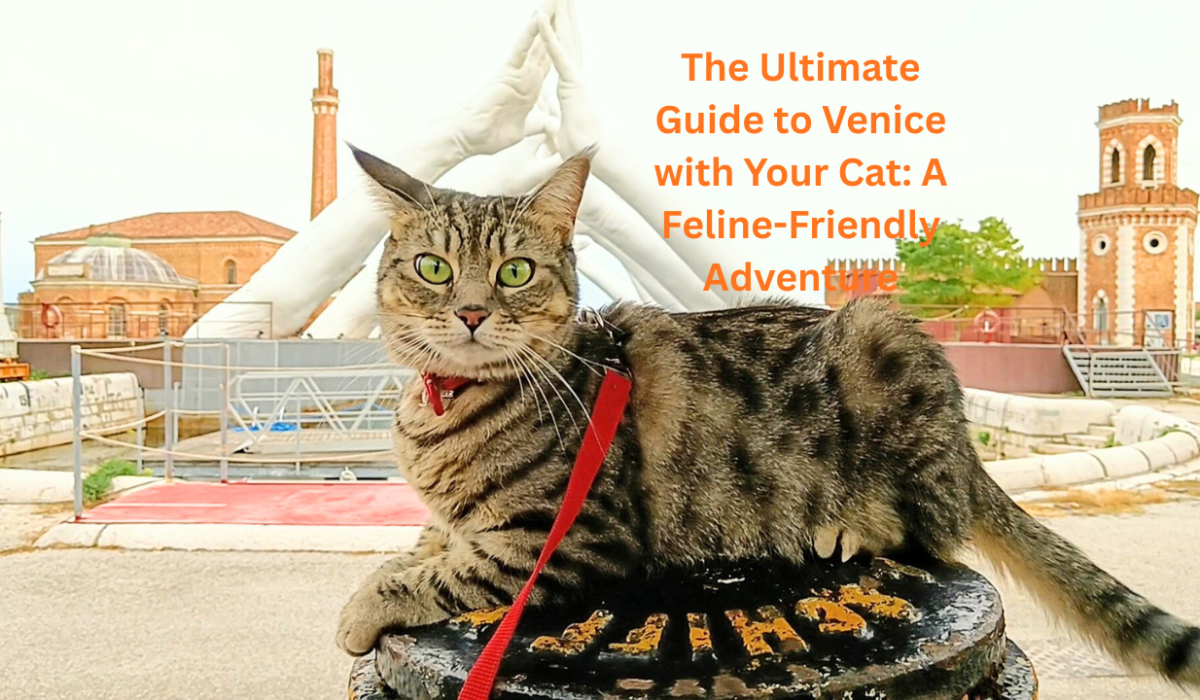
Exploring Venice with Your Cat: A Feline-Friendly Journey Through the Floating City
Exploring Venice with a cat may sound ambitious—but with the right preparation, it can become one of the most rewarding experiences in Italy.
Venice has long captivated travellers with its labyrinth of canals, Renaissance palaces and luminous lagoon light. Yet beyond the postcard views lies a quieter truth: this city of water can be experienced thoughtfully and gracefully with a well-prepared feline companion.
I discovered that difference through Gigia.
We were already living in Veneto when our explorations began. Over time, Venice became one part of a much larger journey through the region—a place we could return to, explore slowly, and experience differently depending on the time of day, the season and Gigia’s mood.
If you’re planning a broader Italian journey, begin with our Ultimate Guide to Travelling Italy with Your Cat, which covers the wider practical questions of travelling around Italy with a feline companion.
This Venice guide draws from Gigia’s real journeys through the city and focuses on the experience of actually being there with a cat—not simply seeing Venice’s famous sights.
Why Venice Can Actually Work Well for Cats
At first glance, Venice may seem difficult for cat travel.
No cars. Endless bridges. Open water everywhere.
Yet many experienced cat travellers discover something unexpected: parts of Venice can be remarkably quiet compared with major Italian cities.
Why?
- No ordinary city traffic through the historic centre
- Walkable districts
- Quiet residential neighbourhoods away from the main tourist routes
- Quieter early mornings and evenings
In quieter sestieri, Venice slows dramatically—especially outside the busiest hours.
Gigia adapted quickly because Venice rewards slow movement and observation. And that, more than ticking off attractions, is the secret to enjoying the city with a cat.
Preparing for Venice: What You Truly Need
Venice rewards preparation.
Before arrival, make sure you have:
- A secure, structured carrier suitable for vaporetto travel
- A properly fitted non-stretch harness and leash
- Familiar bedding or scent items
- Updated ID tags with accommodation details
Public transport rules matter here.
Cats must travel in secure carriers when using ACTV water buses. A structured, ventilated carrier is therefore essential—not optional.
For gear recommendations tested on real Italian journeys, see our Best Cat Travel Gear Guide.
Advance booking is equally important. Always confirm cat policies directly before arrival, particularly for accommodation and any private transport or activities.
Arrival: Navigating Venice Quietly
Most journeys begin at:
- Santa Lucia Station
- or
- Piazzale Roma
From there, transport becomes water-based.
Allow extra time when boarding your first vaporetto. For many cats, the movement of the lagoon may be unfamiliar at first.
Gigia’s method is simple:
Pause. Observe. Allow adjustment.
The Number 1 vaporetto line is ideal for first-time visitors because it moves slowly along the Grand Canal. Early morning departures tend to be much quieter, making them particularly useful for cats sensitive to crowds or sudden movement.
If you’re extending your trip beyond the historic centre, our Venice Province Guide covers the wider province beyond the city.
Best Areas to Explore with a Cat
Castello: Space and Light
Castello is one of the districts I particularly enjoy exploring with Gigia.
Why it works:
- Quieter streets
- Shaded campi
- Fewer crowds away from the busiest routes
- A more residential atmosphere
Early afternoon light filters beautifully through the courtyards, while quieter streets make it easier to let a cat observe the city without becoming overwhelmed.
Gigia naturally settled here.
Libreria Acqua Alta
No Venice visit feels complete without Libreria Acqua Alta.
Books stacked in gondolas and bathtubs protect against flooding, while resident cats wander confidently between shelves.
It seems almost designed for cat lovers.
But Venice is not simply about famous sights. The real pleasure of travelling with a cat is often discovering how a city changes when you stop rushing through it.
Evenings Along the Lagoon
As evening falls, Venice becomes magical.
The Riva degli Schiavoni turns golden.
Water reflects the light. Footsteps soften. Crowds thin.
Outdoor restaurants slightly away from San Marco may welcome well-behaved pets, but policies vary, so always check before settling in.
For Venetian food culture, cicchetti and wine bars, see our Venice Bacari Guide.
Choose venues with:
- Outdoor seating
- Space between tables
- Lower foot traffic
Venice is best enjoyed slowly.
Especially with a cat.
Can You Take a Cat on a Gondola?
Yes—sometimes.
Some gondoliers may accept calm cats in secure carriers, though policies and individual preferences vary. Always ask before boarding and confirm the arrangement in advance whenever possible.
Tips:
- Choose quieter canals where appropriate
- Consider early morning rides
- Keep your cat secured throughout
- Don’t assume every gondolier will accept animals
For socialised cats comfortable in carriers, a gondola ride can be surprisingly peaceful.
Safety Considerations Unique to Venice
Venice requires extra awareness because the things that make it beautiful—the canals, bridges and open water—also create risks for a curious cat.
Water Exposure
Many canal edges lack protective railings.
Even confident cats should remain leashed or securely contained near water.
This is non-negotiable.
Summer Heat
Stone pavements can become extremely hot.
Best outing times:
- Early morning
- Evening
Avoid the hottest part of the day during summer.
Acqua Alta
Seasonal flooding affects lower walkways, particularly during periods of high water.
Consider:
- Waterproof carrier covers
- Flexible routes
- Elevated pathways where appropriate
Venice Is Better When You Don’t Rush It
One of the biggest mistakes travellers make in Venice is trying to conquer it.
With a cat, that approach becomes almost impossible—and that may be a blessing.
You stop more often.
You take quieter streets.
You spend longer in one place.
You notice the small things: a courtyard, a church bell, a patch of sunlight, a quiet canal, a cat watching from a window.
This is also why Venice fits so naturally into the broader slow-travel philosophy we explore in our Slow Travel in Italy guide.
When Venice Is Only Part of the Journey
Venice is extraordinary. But if you have several days in the region, you don’t necessarily need to stay in the city for the entire trip.
The wider Veneto offers countryside, hills, historic towns and slower landscapes that can complement a Venetian stay beautifully—particularly if your cat enjoys quieter surroundings.
If you are travelling beyond Venice, the wider Venice Province Guide is the natural next step for exploring the region beyond the historic centre.
A City to Experience, Not Conquer
Venice is not a checklist destination.
It rewards stillness. It rewards patience. It rewards slower movement.
With preparation, patience and respect for the city’s rhythm, Venice with a cat becomes not merely possible—but memorable.
What can overwhelm rushed travellers becomes something entirely different:
- Quiet canals
- Golden evening light
- Echoing footsteps in empty squares
- Unexpected corners discovered simply by wandering
…and a cat calmly observing it all as if the city were designed just for her.
Gigia’s verdict?
“Bridges: acceptable. Gondolas: elegant. Admirers: excessive, but understandable.”