
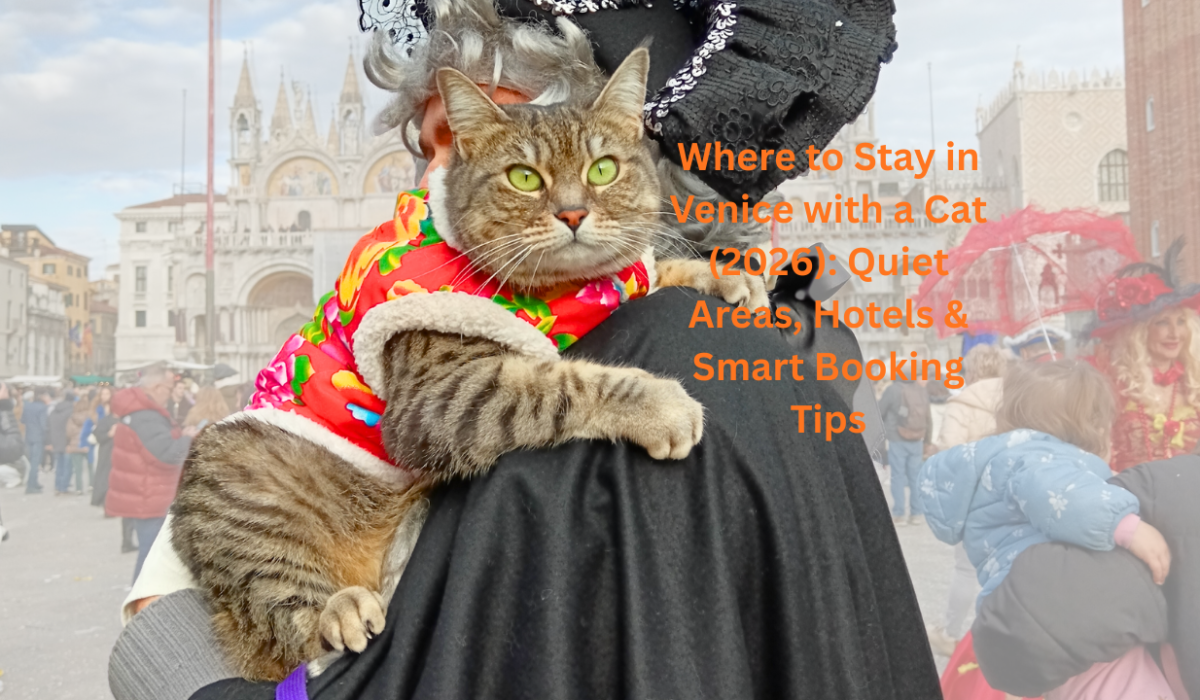
Where to Stay in Venice with a Cat (2026): Quiet Areas, Hotels & Smart Booking Tips
Gigia has taught me that sometimes the road itself becomes the destination.
I was already living in Treviso when I adopted Gigia. We had the city—its canals, its piazzas, its daily rhythms. But it was only when we started exploring beyond the city walls that I truly discovered Veneto.
Like many travellers, we assumed the best of Veneto lay in its famous cities—Venice, Verona and Padua. They are extraordinary. But over the years, we discovered that Veneto’s greatest treasures often lie between them.
A winding road through the Prosecco Hills. A quiet riverside path where watermills still turn. A mountain pass that opens onto valleys stretching towards the Dolomites. These are the places where Veneto reveals its character.
And the best part? Veneto is one of Italy’s most rewarding regions to explore by car. Distances are manageable, the landscapes change quickly, and once you leave the busiest routes behind, the journey becomes part of the experience.
Sometimes the destination is memorable. More often, it’s the unexpected stop along the way that stays with you.
For the wider regional picture, see our Veneto Region Guide.
If Treviso is your base, our 15 Best Day Trips from Treviso is useful for shorter excursions from the city—but this guide takes a different approach.
Here, we’re interested in the journey itself: the roads, landscapes and stops that make a Veneto road trip worth taking.
Here are ten scenic drives that have become part of our Veneto adventures.
Where These Drives Are Located
From west to east, these routes take you across almost every landscape Veneto has to offer:
- Lake Garda
- Verona
- Euganean Hills
- Bassano del Grappa
- Asiago Plateau
- Castelfranco Veneto
- Treviso
- Prosecco Hills
- Cison di Valmarino
- Po Delta
One of the reasons Veneto is such a rewarding region for road trips is its incredible variety. Within a relatively short distance, you can travel from vineyards to mountains, rivers to coastline, often in the same day.
Why Veneto Is Perfect for Road Trips
Veneto is compact. You can cross much of the region relatively quickly, yet within that space the landscapes change dramatically.
You’ll drive through:
- Vineyard-covered hills – the UNESCO-listed Prosecco Hills, where every curve reveals another postcard view
- Dramatic mountain scenery – the Dolomites and the Asiago highlands
- Quiet river valleys – the Sile, the Piave and the Brenta
- Medieval hilltop towns – Asolo, Marostica and Cison di Valmarino
- The Adriatic coast – including the wetlands of the Po Delta
- Lake Garda – Italy’s largest lake, with its dramatic northern shoreline
Veneto rewards slow driving. You don’t need to drive hundreds of kilometres. Many of our favourite journeys are short enough to leave plenty of time for stopping, walking, eating and simply looking around.
That is also why these routes work particularly well with cats. Shorter journeys, quieter secondary roads and the freedom to stop frequently can make travelling with a cat more manageable than spending hours on the motorway.
Before You Set Off
Best Seasons
🌸 Spring – Wildflowers, mild temperatures and vineyards coming to life. The green of the new leaves is unforgettable.
🍂 Autumn – Harvest season in the Prosecco Hills. Vineyards turn gold and crimson, and the light is softer.
What to Avoid
☀️ Summer weekends – Peak heat and holiday crowds. Italian roads are busier, and many towns fill with visitors. Book accommodation early if travelling then.
August – Major holiday traffic can make popular routes considerably busier, particularly around the coast and major tourist destinations.
Practical Tips
- Stay off the highway when the journey is the point – The Autostrada is efficient, but the best scenery is often found on the strade provinciali—the secondary roads that wind through countryside and villages.
- Drive slowly – The best discoveries happen when you’re not rushing. Winding vineyard roads demand patience anyway.
- Keep some flexibility – The joy of a road trip is the ability to stop whenever something catches your eye. A village festival. A panoramic viewpoint. A roadside stall selling local produce.
- Check parking and ZTL restrictions – Many historic towns have limited-traffic zones. Look for designated parking just outside the historic centre.
- Coffee stops matter – Italian road trips are punctuated by espresso breaks. Every village has a café.
- Travelling with a cat – Quiet roads and frequent stops can make Veneto particularly manageable for feline travellers. Our Ultimate Guide to Travelling Italy with a Cat covers the wider practicalities of travelling around Italy.
The 10 Best Scenic Drives
1. Treviso → Asolo ⭐⭐⭐⭐⭐
One of Veneto’s classics, and one we return to again and again.
The drive from Treviso to Asolo takes you through gentle countryside, past vineyards and olive groves, with the foothills of the Dolomites appearing on the horizon. Every few kilometres, another medieval village appears.
Asolo itself—the “Pearl of the Veneto”—is your reward. This elegant hilltop town combines Renaissance architecture, panoramic views and some of the best café terraces in the region.
Drive time: ~34 km, ~40–45 minutes
Best for: Hilltop towns, vineyard views, Renaissance atmosphere
Stop for: Coffee in Asolo’s main piazza; lunch with a view over the Veneto plain
2. Conegliano → Valdobbiadene (The Prosecco Road)
Officially associated with the Strada del Prosecco, this is one of Veneto’s most celebrated wine-country journeys.
The historic route winds through steep vineyard-covered hills, linking medieval villages and family-run wineries. The views are spectacular. The roads are narrow. The Prosecco is world-class.
In spring the hills glow vivid green. By autumn they become a patchwork of gold, amber and crimson as harvest season begins.
Unmissable stops:
- Conegliano – Gateway to Prosecco country, with its historic castle and long association with wine.
- Molinetto della Croda – A historic watermill beneath a rocky cliff, with a waterfall cascading behind it.
- Rolle – A picturesque hamlet surrounded by terraced vineyards within the UNESCO World Heritage landscape.
- Osteria alla Terrazza – Perched high above the Valdobbiadene hills, with a remarkable panorama across vineyards, villages and towards the Dolomites. Arrive early if you want the best table.
Drive time: 1–2 hours for the core route; allow a full day for stops
Best for: Wine lovers, photographers, slow travellers
Stop for: A tasting at a family-run winery; lunch overlooking the Prosecco Hills
3. Treviso → Cison di Valmarino
If someone asked me to recommend just one drive that captures the spirit of Veneto, this would be it.
From Treviso, head north through the countryside, passing through Follina with its serene Abbey of Santa Maria. The landscape shifts from farmland to wooded hills, with the Dolomites growing closer.
Cison di Valmarino is your destination—one of Italy’s most beautiful villages, with Castelbrando rising above the vineyards.
For a peaceful walk, follow the Via dell’Acqua (Waterway Trail), which runs alongside the Rujo river past historic watermills. The gentle path offers a good way to stretch your legs and explore the landscape.
Drive time: ~41 km, ~45 minutes
Best for: Castles, forest scenery, quiet villages
Stop for: Coffee at Caffè Roma; a walk along the Via dell’Acqua
4. Bassano del Grappa → Asiago Plateau
This drive takes you from the Brenta River valley up onto the high meadows of the Asiago Plateau—a completely different Veneto.
Bassano del Grappa, famous for its wooden bridge and grappa distilleries, is the perfect start. From there, the road climbs through forests and past mountain villages, opening onto wide grazing pastures where cows produce the cheese that made Asiago famous.
In summer, the plateau is green and cool—a welcome escape from the heat. In autumn, the colours are spectacular.
On clear days, the views stretch from the high plateau back towards the Venetian plain.
The roads around the plateau offer a very different experience from the better-known Dolomites: mountain scenery without necessarily having to follow the busiest Alpine routes.
Drive time: ~32 km, roughly 35–45 minutes depending on route and conditions
Best for: Mountain scenery, cheese lovers, summer escapes
Stop for: Fresh Asiago cheese at a local farm; lunch in a mountain trattoria
5. Sile River Road
This isn’t a fast drive. It’s a quiet one.
The Sile River flows through the Treviso countryside, lined with ancient watermills, herons and peaceful walking paths. The road follows the river landscape, passing through small villages where life seems to have stood still.
This is one of Veneto’s most restorative drives—well suited to travellers with cats, or anyone looking for a quieter day in the countryside.
Drive time: Variable—take the scenic route between Treviso and the lagoon
Best for: Nature lovers, birdwatchers, quiet reflection
Stop for: A walk along the river; photographs of the historic watermills
6. Castelfranco Veneto → Marostica
A drive through Veneto’s agricultural heartland, passing walled towns and Renaissance architecture.
Castelfranco Veneto, with its striking medieval walls, is one of the region’s best-preserved historic towns. From there, the road takes you through farmland and past vineyards, with the hills rising ahead.
Marostica is famous for its living chess game and two castles—one at the top of the hill, one at the bottom.
Drive time: ~26 km, roughly 30–40 minutes depending on traffic
Best for: Historic towns, castles, photography
Stop for: Exploring Marostica’s medieval centre; a coffee in the main piazza
7. Verona → Lake Garda
This is one of northern Italy’s most rewarding scenic drives.
From Verona, the road heads west towards the shores of Lake Garda, passing through vineyards and olive groves. Depending on the route, the landscape changes from the plains around Verona to the dramatic shoreline of the lake.
Stops along the way include Sirmione, with its Scaliger Castle and Roman ruins, as well as the picturesque towns of Lazise and Bardolino.
Drive time: Around 45 minutes to the southern lake area, depending on traffic
Best for: Lake views, waterside towns, Verona as a base
Stop for: A lakeside stroll in Sirmione; a local food or wine stop around Bardolino
8. Asiago Area
The area around Asiago offers a landscape of wide meadows, forests and panoramic mountain views. Traditional villages like Enego, Foza and Gallio provide quieter alternatives to the region’s more famous Alpine destinations.
The roads are quiet. The air is fresh. In summer, it’s a cool escape from the heat. In winter, it becomes a snowy mountain retreat, although road conditions require considerably more planning.
What makes this area special is its accessibility—you can be in the mountains relatively soon after leaving the plains, yet the landscape seems completely removed from urban Veneto.
Drive time: Around 1 hour from Bassano del Grappa, depending on route
Best for: Mountain escapes, nature lovers, quiet roads
Stop for: Fresh Asiago cheese; a walk through the high meadows
9. Euganean Hills (Colli Euganei)
Just south of Padua, the Colli Euganei rise unexpectedly from the surrounding plain—a range of volcanic hills dotted with castles, vineyards and thermal springs.
The roads wind through the hills, past olive groves and wine estates, with views across the flatlands.
Stop at Arquà Petrarca, one of Italy’s most beautiful villages, or explore the thermal towns around Abano Terme.
Drive time: ~40 minutes from Padua, depending on the starting point
Best for: Thermal towns, historic villages, vineyard scenery
Stop for: Gelato in Arquà Petrarca; a walk through the historic centre
10. Delta del Po
This is Veneto’s other coastline—not the sandy beaches of the Adriatic, but the wetlands of the Po Delta.
This is a completely different Veneto: flat, watery and wild. The roads follow the riverbanks through rice paddies and fishing villages, with birdlife everywhere.
A must-visit stop is Rifugio Il Ghebo—a wildlife sanctuary and observation point within the delta. From here, you can watch herons, flamingos and other migratory birds in their natural habitat.
Sunset over the delta is unforgettable.
If you enjoy wildlife photography or birdwatching, bring binoculars—you’ll almost certainly use them.
Drive time: Variable—allow a full day
Best for: Birdwatching, sunsets, photographers
Stop for: Fresh fish in a riverside trattoria; sunset over the wetlands
Why Driving Slowly Changes Everything
The best discoveries in Veneto are rarely planned.
They’re the roadside trattoria where you stop for lunch and find the best pasta of your trip. The small church you notice from the road, with its unexpectedly beautiful frescoes. The village you’d never heard of, where a festival is happening and you’re welcomed like a neighbour.
Slow driving isn’t a compromise. It’s a choice.
It aligns with the philosophy we explore in our Slow Travel in Italy guide: by travelling less frantically, you discover more.
Driving with Gigia
Cats don’t all enjoy long motorway journeys. Some do better with frequent breaks, familiar surroundings, quiet roads and time to adjust.
Veneto is well suited to this style of travel. The drives can be short. The villages are walkable. There are plenty of opportunities to stop, rest and change plans.
For the wider practicalities of travelling through Italy with a cat—including transport, accommodation and life on the road—see our Ultimate Guide to Travelling Italy with a Cat.
Suggested Itineraries
🐾 3-Day Escape
Treviso → Asolo → Prosecco Hills
Spend Friday in Treviso, Saturday exploring Asolo and Sunday following the Prosecco Hills. The relatively short driving distances leave plenty of time for stops.
🐾 Four-Day Adventure
Treviso → Bassano del Grappa → Asiago Plateau → Valdobbiadene
Climb from the plains to the mountains, then descend through the Prosecco Hills. A varied route that combines landscapes rather than simply collecting destinations.
🐾 Seven-Day Veneto Road Trip
Treviso → Asolo → Bassano del Grappa → Asiago Plateau → Conegliano → Valdobbiadene → Castelfranco Veneto → Treviso
This route covers countryside, mountains and vineyards while keeping the emphasis on scenic secondary roads and flexible stops.
If you’re looking for more short excursions specifically from Treviso, continue with our 15 Best Day Trips from Treviso.
Our Favourite Drive
If I had to choose just one?
Treviso → Cison di Valmarino.
It’s not the most famous. It’s not the most dramatic. But it has the character I return to most.
It’s also the drive we return to most often—and one that somehow never seems the same twice.
The road winds through countryside that is lived-in, not staged. The villages have their own character. The views are beautiful without trying too hard. And Cison itself is a place you’ll remember.
Gigia agrees—and her standards are high.
Ready to Plan Your Own Veneto Road Trip?
Start with our Veneto Region Guide, where you’ll find the wider regional structure and links into Veneto’s provinces and destinations.
If Treviso is your base, our 15 Best Day Trips from Treviso is the natural companion for shorter excursions.
And if you want to understand the broader philosophy behind travelling this way, explore Slow Travel in Italy.