
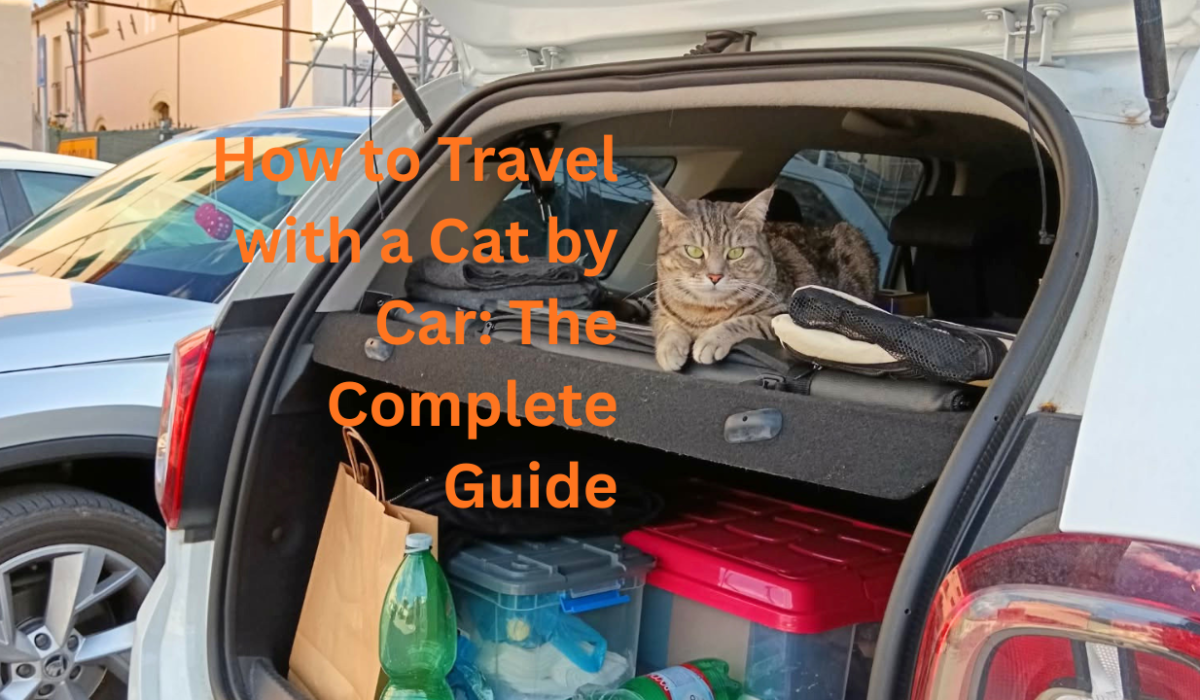
How to Travel with a Cat by Car: The Complete Guide
When you travel with a cat by car, the journey itself becomes part of the experience. The goal isn’t simply to get from A to B. It is to make the car feel safe enough that your cat can relax along the way.
Gigia and I have travelled more than 20,000 miles together, visiting more than 100 cities, villages and towns across Italy. But she wasn’t born a road-tripper.
Like many cats, she had to learn that the car was not something to fear. Her confidence developed through short journeys, familiar routines and thousands of small experiences that gradually made travelling predictable.
How to Travel with a Cat by Car: The Essentials
- Use a secure carrier: Your cat should have a safe, familiar space inside the vehicle.
- Introduce the car gradually: Start with the carrier, then the stationary car, then very short drives.
- Keep your cat secure while driving: Never allow your cat to roam loose around the vehicle.
- Plan longer journeys around your cat: Carry water, familiar bedding, food, a litter tray and other essentials.
- Take breaks when appropriate: Check your cat regularly rather than following an inflexible timetable.
- Be extremely careful at rest stops: Never open a carrier or car door outdoors unless your cat is securely restrained.
- Watch temperature carefully: Never leave your cat unattended in a parked car.
- Learn your cat’s signals: Stress, nausea and discomfort can look similar.
Is Your Cat Suited to Car Travel?
Some cats adapt surprisingly well to car journeys. Others find travelling extremely stressful. There is no single personality type that guarantees a cat will enjoy travelling.
Before planning a long road trip, consider how your cat responds to the things that make car travel challenging:
- New environments: Is your cat curious or easily overwhelmed?
- Noise and vibration: How does your cat react to unfamiliar sounds and movement?
- The carrier: Is it a familiar resting place or mainly associated with visits to the vet?
- Previous journeys: Has your cat already had positive or negative experiences in a vehicle?
- Harness training: Can your cat safely wear a harness if you need to leave the vehicle during a stop?
Kittens may adapt readily to new experiences, but age alone does not determine whether a cat will become a good traveller. Personality, previous experiences and the way training is introduced all matter.
If your cat consistently shows severe distress despite careful, gradual training, staying at home may be the kinder option.
For broader advice on understanding whether your cat is ready for travel, see our Expert Cat Travel Tips .
How to Train a Cat to Travel by Car
The biggest mistake is starting with the journey.
Before asking your cat to travel hundreds of kilometres, teach them that the carrier and the car itself are safe, familiar places.
Step 1: Make the carrier part of everyday life
Leave the carrier somewhere your cat can investigate it freely for days or weeks before the first drive. Add familiar bedding, treats or a favourite toy.
Many cats associate carriers with veterinary visits. Leaving the carrier accessible helps create a different association.
Step 2: Let your cat enter voluntarily
Reward your cat for approaching and entering the carrier. Avoid forcing them inside whenever possible.
Step 3: Practise closing the door
Once your cat is comfortable entering, briefly close the door while they remain inside. Start with seconds rather than minutes, then gradually extend the duration.
Step 4: Introduce the car without driving
Take the carrier to the car. Allow your cat to become accustomed to the new surroundings. Then, on another occasion, start the engine without moving.
Step 5: Begin with tiny journeys
Drive around the block. Return home. Repeat. Gradually increase the distance only when your cat remains comfortable.
Gigia’s first car journey was a short drive to Valdobbiadene, about 20 miles from Treviso. I expected protest. Instead, she was quiet and observant.
Choosing a Safe Cat Carrier for the Car
The carrier is the foundation of safe car travel. It should be secure, well ventilated and large enough for your cat to stand, turn around and lie down comfortably.
Hard-sided carriers
Hard-sided carriers are sturdy and easy to clean, making them a practical choice for cats who scratch or attempt to escape.
Soft-sided carriers
Soft-sided carriers are lighter and more flexible, but may be unsuitable for cats who chew, scratch or push against their enclosure.
Backpack carriers
Backpack carriers can be particularly useful when a car journey forms part of a larger adventure and your cat will also travel on foot.
Gigia’s preferred carrier: a versatile Zaino-style backpack that functions both as a carrier and as a portable sanctuary. Its top-opening design allows her to emerge and observe when she feels confident, or retreat into her familiar den when she wants security.
When choosing a carrier for car travel, look for:
- Good ventilation
- A secure door
- Enough space for your cat to reposition comfortably
- A reliable way to secure the carrier inside the vehicle
- Easy-clean surfaces
- Familiar bedding that smells like home
For specific equipment recommendations, see our Best Cat Travel Gear guide.
Where Should a Cat Carrier Go in the Car?
Once your cat is comfortable travelling, the next priority is securing the carrier properly.
- Back seat: Place the carrier securely on the back seat or on the floor behind the front passenger seat.
- Secure the carrier: Use an appropriate restraint or seatbelt system designed for the carrier.
- Keep it level: If the seat slopes, use stable support underneath the carrier rather than allowing it to tilt.
- Avoid the front passenger seat: Airbags can pose a serious danger to an animal in a carrier.
- Protect from direct heat and sunlight: Keep the carrier away from direct sun and strong blasts from heating or air-conditioning vents.
- Secure your luggage: Heavy or loose objects should never be able to fall onto the carrier during sudden braking.
What to Pack for a Road Trip with a Cat
A car gives you considerably more luggage space than other forms of transport, but keeping your cat’s essentials together in one easily accessible bag makes travelling much easier.
- Secure carrier
- Harness and lead
- Fresh water
- Travel bowl
- Familiar blanket or bedding
- Favourite toy
- Treats
- Wet wipes and paper towels
- Spare bedding
- Portable litter tray
- A small amount of your cat’s usual litter
- Pet passport if travelling internationally
- Vaccination records where relevant
- Any prescribed medication
Our Best Cat Travel Gear guide covers the equipment we recommend for travelling cats.
Feeding Your Cat Before a Car Journey
Food timing can affect how comfortable your cat feels during a drive, particularly if they are prone to nausea.
Rather than giving a large meal immediately before departure, many cats do better with a lighter meal several hours beforehand.
If your cat regularly vomits or shows signs of nausea during car journeys, speak to your vet about an appropriate feeding routine and whether motion-sickness treatment may be appropriate.
Do not make significant changes to your cat’s normal feeding routine without veterinary advice.
Motion Sickness in Cats During Car Travel
Motion sickness and travel anxiety can look remarkably similar, which is why persistent symptoms deserve attention.
Possible signs include:
- Drooling
- Vomiting
- Lip licking or repeated swallowing
- Restlessness
- Vocalisation
- Reluctance to eat
Motion sickness occurs when signals from the inner ear and visual system do not match. Anxiety can produce some of the same behaviours.
If your cat repeatedly becomes sick during car journeys, speak with your vet. They can help determine whether motion sickness, anxiety or another issue may be involved and whether medication is appropriate.
How Often Should You Stop on a Road Trip with a Cat?
There is no universal timetable that suits every cat. The right stopping pattern depends on the length of the journey, your cat’s behaviour, weather conditions and whether they need water, a litter opportunity or a break from the carrier.
For longer journeys, a practical starting point is to plan a stop approximately every 2–3 hours so that you can check your cat and offer water.
Watch your cat rather than following the clock rigidly. A confident traveller may sleep through much of a journey, while an anxious cat may need more frequent attention.
Safe Rest Stops: The Most Important Rule
For me, this is the single most important lesson from thousands of kilometres with Gigia.
During a trip to Calabria, Gigia was once let out of the car without a harness. It was a near-disaster and taught me never to take shortcuts with safety.
Never open a car door or carrier outdoors unless your cat is securely restrained.
A startled cat can escape in a fraction of a second. Instinct can override even a very strong bond between cat and guardian.
Gigia’s rest-stop protocol
- Park somewhere as quiet and safe as possible.
- Keep the carrier inside the vehicle until your cat is secured.
- Put on the harness and attach the lead before opening the carrier or vehicle door.
- Check the surroundings for traffic, dogs and potential escape routes.
- Offer fresh water.
- Never leave your cat unattended in the vehicle.
Italy’s Autogrill service areas can provide useful stopping points on long drives, but they are still public environments. Treat every stop as an escape-risk situation and keep your cat securely controlled.
Should a Cat Leave the Carrier During a Car Journey?
This depends entirely on the individual cat.
Some cats feel safest inside their carrier for the entire journey. Others may become comfortable enough to move around the vehicle when it is safely closed and stationary.
Gigia is unusual in this respect. Once she became a confident traveller, she began sleeping on the back seat during journeys. When the road becomes steep or winding, she sometimes climbs back into her carrier herself — a quiet indication that she knows when she wants the security of her familiar den.
But Gigia’s behaviour should not be treated as a model that every cat should follow.
If your cat is allowed outside the carrier while the vehicle is stationary, all doors and windows should be closed and secured first.
How to Keep a Cat Comfortable During a Long Drive
Your driving style and the environment inside the car can make a significant difference.
- Drive smoothly: Avoid sudden acceleration, braking and sharp cornering.
- Keep the temperature comfortable: Avoid overheating or chilling the carrier.
- Reduce unnecessary noise: Loud music can add to sensory stimulation.
- Use familiar smells: A blanket or piece of clothing carrying the scent of home can be reassuring.
- Partially cover the carrier if your cat prefers it: Some cats find reduced visual stimulation calming.
- Observe your cat: Behaviour is often the best guide to whether the journey is comfortable.
Some cats seem particularly comfortable in quieter vehicles, including electric cars, but a quieter engine does not remove the need for gradual acclimatisation.
Travelling with a Cat in Hot Weather
Cars can become dangerously hot very quickly, even when the outside temperature does not initially seem extreme.
- Never leave your cat alone in a parked car.
- Keep the vehicle properly cooled during the journey.
- Avoid prolonged stops in direct sunlight.
- Offer fresh water.
- Monitor your cat rather than relying only on the outside temperature.
Rapid breathing, excessive salivation, weakness, vomiting, confusion or collapse can indicate serious overheating. Heatstroke is an emergency requiring immediate veterinary attention.
Cold Weather Car Travel with a Cat
Cold-weather journeys require preparation too, particularly if you expect to stop for extended periods.
- Place warm, familiar bedding inside the carrier.
- Keep the carrier away from cold drafts.
- Warm the vehicle before beginning the journey when appropriate.
- Never leave your cat unattended in a vehicle in extreme cold.
The aim is not simply to make the car warm, but to maintain a comfortable, stable environment throughout the journey.
How to Plan a Long Road Trip with a Cat
Once your cat is comfortable with shorter drives, longer road trips become much easier to manage.
The trick is not to think only about the kilometres. Think about the entire travel day.
- Plan your route: Know where you can safely stop.
- Keep daily driving realistic: Avoid creating unnecessarily exhausting travel days.
- Book accommodation in advance: Confirm that cats are genuinely accepted before arrival.
- Allow flexibility: Your cat may need a longer break than expected.
- Build in recovery time: Don’t schedule an exhausting itinerary immediately after arrival.
For help finding suitable places to stay, see our guide to finding truly cat-friendly accommodation in Italy .
If the attraction of driving around Italy is the slower pace itself, our guide to Slow Travel in Italy explores the philosophy behind travelling more gently.
Arriving at Your Cat-Friendly Accommodation
Getting out of the car safely is only half the journey. Arrival is another moment when cats can escape.
- Keep your cat secured until the room or apartment has been checked.
- Inspect the accommodation: Look for open windows, balconies, gaps behind furniture and other escape routes.
- Set up water and food.
- Place the litter tray somewhere quiet.
- Let your cat explore gradually. Keep the carrier available as a familiar retreat.
Never assume that a property described as “pet-friendly” is automatically suitable for a cat. Confirm the property’s actual policy before booking.
See our guides to finding cat-friendly accommodation in Italy , cat-friendly hotels in Italy and cat-friendly agriturismi .
How to Tell If Your Cat Is Stressed in the Car
Learning to recognise your cat’s signals is more useful than relying on a fixed checklist.
Possible signs of significant travel stress include:
- Panting or rapid breathing
- Excessive vocalisation
- Drooling
- Repeated attempts to escape
- Freezing or becoming unusually rigid
- Restlessness or pacing
- Refusing treats or food
- Repeated lip licking or swallowing
If your cat becomes severely distressed, stop at the first safe opportunity and assess the situation. If necessary, shorten the journey and return to easier training sessions later.
For broader advice on reading feline behaviour during travel, see our Expert Cat Travel Tips .
Common Mistakes When Travelling by Car with a Cat
A few mistakes appear again and again:
- Starting with a long journey instead of gradual training.
- Using the carrier only for vet visits.
- Allowing a cat to travel loose while the vehicle is moving.
- Opening the carrier outdoors without secure restraint.
- Leaving a cat unattended in a parked vehicle.
- Ignoring signs of distress.
- Assuming every cat will become a traveller.
- Planning the journey around human convenience alone.
The last mistake is perhaps the most important. A successful road trip with a cat is not simply one in which you reach the destination. It is one in which your cat remains physically safe and emotionally comfortable along the way.
Gigia’s Road Trip Routine
After thousands of kilometres, Gigia and I have developed a rhythm that works for us.
Before leaving
- Light breakfast
- Carrier prepared with familiar bedding
- Water ready
- Harness available
- No unnecessary rushing
During the journey
- Drive smoothly
- Check on Gigia regularly
- Stop approximately every 2–3 hours when appropriate
- Offer water
- For Gigia, allow a short supervised walk when conditions are safe
On arrival
- Keep Gigia secured until the accommodation is ready.
- Set up water, food and litter.
- Allow her to explore at her own pace.
- Give her time to decompress.
Gigia has also developed a tiny communication system of her own. In the car or in a closed public space, when she wants a break, she comes directly in front of my face and gives a short, crisp “Ah”.
It is a small signal, but recognising it has become part of the quiet language we have developed through years of travelling together.
Frequently Asked Questions About Travelling with a Cat by Car
How long can a cat stay in a carrier during a car journey?
There is no single maximum duration suitable for every cat. On longer journeys, plan regular opportunities to check your cat, offer water and provide access to a litter tray when appropriate.
How often should I stop when driving with a cat?
A practical starting point for longer journeys is approximately every 2–3 hours, but your cat’s behaviour, health, weather and journey conditions should determine the actual schedule.
Should I feed my cat before a car journey?
A large meal immediately before travelling can increase the risk of nausea. Many cats do better with a lighter meal several hours before departure. Ask your vet for advice if your cat regularly becomes sick during travel.
Can cats use a litter tray during road trips?
For longer journeys, it is sensible to carry a portable litter tray and some of your cat’s usual litter. Some cats will use it during a stop; others will prefer to wait.
Can my cat sit on my lap in the car?
No. A cat should never be allowed to sit loose on the driver’s lap or around the pedals. A loose cat can become a dangerous distraction and can be seriously injured during sudden braking.
Is a harness necessary for a cat on a road trip?
A harness and lead are extremely useful for safe rest stops, particularly if your cat may leave the carrier. Gigia’s harness has prevented potentially serious escapes more than once.
Should I let my cat sleep on the back seat?
Many cats are safest remaining in a secured carrier while the vehicle is moving. Gigia is unusually confident and sleeps on the back seat, but this should not be assumed to be appropriate for every cat. Never allow a loose cat to interfere with the driver or vehicle controls.
Should I cover my cat’s carrier during a car journey?
A light blanket can reduce visual stimulation and make some cats feel more secure. Others prefer to see their surroundings. Observe your cat and make sure ventilation remains excellent.
What should I do if my cat cries in the car?
Do not punish or scold your cat. Vocalisation may indicate fear, discomfort, nausea or simply uncertainty. If it persists, shorten the journey and return to a gentler stage of the training process.
What if my cat never learns to enjoy car travel?
Then car travel may simply not be right for that cat. The goal is not to produce a travelling cat at any cost. The goal is to discover what your individual cat can comfortably enjoy.
Conclusion: One Small Journey at a Time
The first journey may only be around the block.
The next might be to a nearby park.
And one day, if your cat is ready, it might be through vineyards, mountain passes, medieval villages and quiet Italian piazzas.
Every confident travel cat starts in much the same place: with patience, trust and one small journey at a time.
Travelling with a cat by car isn’t about covering the greatest distance in the shortest possible time. It is about learning how your particular cat experiences the journey and adapting the experience around them.
That is what Gigia has taught me after thousands of kilometres on Italian roads. The destination matters, but so does everything that happens between leaving home and getting there.
Start small. Go at your cat’s pace. Notice the little signals. Celebrate the small victories.
And remember: every great road trip begins with a cat who feels safe enough to take the first mile.
Planning Your Italian Road Trip with Your Cat?
For the wider picture — including preparation, transport options, accommodation and destinations — start with our Ultimate Guide to Travelling Italy with a Cat .
If you’re deciding what to take with you, see our Best Cat Travel Gear .
And if you’re planning your stops and overnight stays, explore our guide to finding genuinely cat-friendly accommodation in Italy .