Lazio Travel Guide: Beyond Rome – Hidden Villages, Lakes & Authentic Italy
Lazio is often defined by Rome, but the region extends far beyond the Eternal City. Beyond Rome’s monuments and historic centre lies a quieter landscape of medieval villages, volcanic lakes, Etruscan heritage, hill towns, countryside and deeply rooted local traditions.
This guide explores Lazio beyond Rome through destinations Gigia personally experienced and inspected during her travels. From the dramatic village of Civita di Bagnoregio and the atmospheric ghost town of Celleno to the slower rhythms of Rieti and the Sabine Hills, these are places where Italy feels more intimate and often much less hurried.
📍 Where Is Lazio?
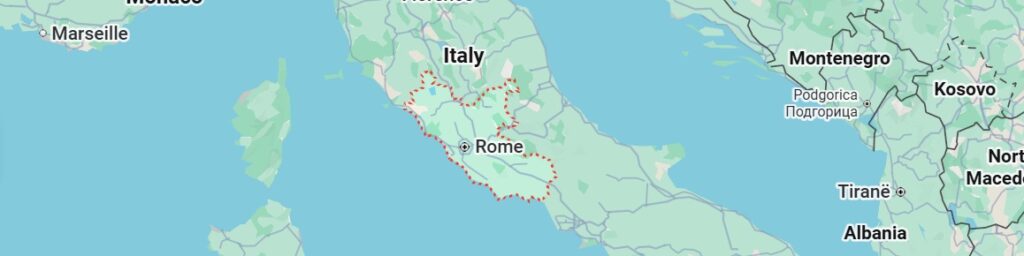
Lazio is located in central Italy, bordered by Tuscany, Umbria, Abruzzo, Molise and Campania, with the Tyrrhenian Sea forming its western edge.
Its position has made Lazio a crossroads of civilizations for thousands of years. Roman history dominates the international image of the region, but the wider landscape preserves layers of Etruscan, medieval, religious and rural history that are just as revealing for travelers interested in authentic Italy.
Geographically, Lazio is remarkably varied for a relatively compact region: volcanic lakes, wooded hills, agricultural landscapes, medieval hill towns, ancient roads and coastal areas all sit within reach of the capital.
🏛️ Lazio Beyond Rome
The defining feature of Lazio is not a single landscape or style of town. It is the contrast between the intensity of Rome and the slower environments that surround it.
Leave the capital behind and the rhythm changes quickly. Historic centres become more manageable, streets become quieter, and everyday life becomes more visible. Medieval villages sit above valleys, olive groves stretch across the hills and volcanic lakes provide a completely different perspective on central Italy.
For travelers with cats, this contrast is particularly interesting. The smaller destinations are not automatically “cat-friendly” — policies and conditions still need to be checked individually — but their lower traffic, walkable historic centres and slower rhythms can make them easier environments in which to travel with a feline companion.
🌄 The Lazio Destinations Gigia Explored
Rather than treating Lazio as one uniform destination, it is more useful to think of the region as a collection of very different experiences.
Each destination offers a different reason to visit. Some are dramatic, some atmospheric, some cultural and some simply offer the pleasure of slowing down. Gigia’s detailed reports below document the places she personally inspected, including selected cafés, restaurants, viewpoints and local discoveries.
🏰 Viterbo: Medieval Lazio at a Slower Pace
Viterbo offers one of the clearest contrasts with Rome: a historic city shaped by medieval architecture, atmospheric streets and a noticeably slower rhythm.
Its historic centre provides a very different urban experience from the intensity of the capital. Instead of constantly moving between major attractions, travelers can spend time walking, observing local life and exploring the city’s historic quarters at a more manageable pace.
For travelers with cats, that difference in rhythm is part of Viterbo’s appeal. It is not a guarantee of feline comfort — individual accommodation, traffic, weather and crowd conditions still matter — but it can provide a more relaxed environment for a cat accustomed to traveling.
Viterbo can also work as a base for exploring the wider northern Lazio landscape, making it particularly useful for travelers interested in combining medieval towns, countryside and unusual villages.
For practical advice on how Viterbo fits into a wider Rome and Lazio journey, see our Cat-Friendly Rome & Lazio Itinerary .
🌄 Civita di Bagnoregio: The Village Above the Valley
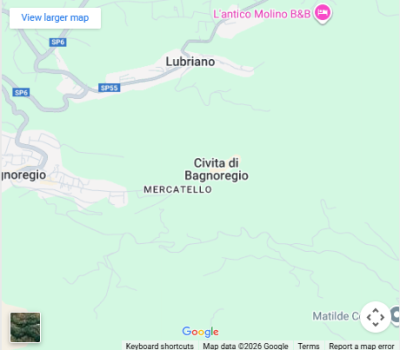
Civita di Bagnoregio is one of Lazio’s most extraordinary landscapes: a historic village perched dramatically above the Valle dei Calanchi and reached by a pedestrian bridge.
Gigia personally explored Civita, including the memorable experience at Osteria al Forno di Agnese, where a table was found for Gigia and her humans despite the restaurant being fully booked.
The village is remarkable precisely because it feels fragile and suspended: ancient stone buildings, dramatic views and a pedestrian-only historic centre create an experience unlike conventional Italian city sightseeing.
Civita is therefore best understood not simply as a “must-see” attraction, but as a destination requiring thoughtful feline-first planning.
For Gigia’s detailed first-hand exploration, including the places she inspected, see the full destination report below.
🏚️ Celleno: Lazio’s Ghost Town
Celleno, often described as the ghost town of Lazio, offers an entirely different experience from Civita di Bagnoregio.
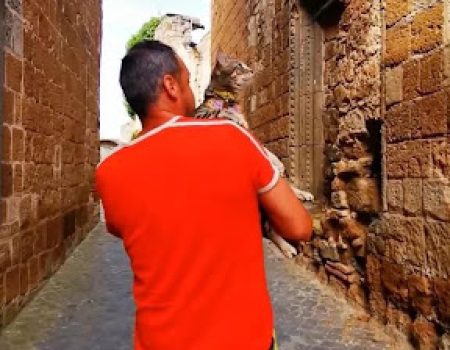
Its abandoned medieval core, crumbling stone structures and remarkably quiet streets create an atmosphere of suspended time. Rather than competing for attention, Celleno invites visitors to slow down and observe.
Gigia personally explored the village and its surroundings, inspecting the abandoned streets, viewpoints and nearby walking areas.
Celleno is particularly interesting as part of a slower northern Lazio journey, especially when combined with Civita di Bagnoregio.
For Gigia’s complete first-hand report, including the places she personally inspected, continue to the detailed Celleno section below.
📍 Rieti & the Sabine Hills: Lazio at Its Most Authentic
Rieti offers another version of Lazio altogether: a historic city with a walkable centre surrounded by the landscapes of the Sabine Hills.
Gigia explored Rieti and the surrounding Sabine countryside, including its historic centre and local cultural life.
Beyond the city, Sabina unfolds into olive groves, medieval villages, panoramic terraces and quiet country roads. Places such as Farfa, Toffia and Roccantica reveal a Lazio that feels far removed from the intensity of Rome.
This is one of the strongest examples of the region’s appeal for slow, feline-first travel: fewer crowds, more manageable environments and more opportunities to experience ordinary Italian life.
The detailed Rieti and Sabine Hills report below contains Gigia’s first-hand discoveries and local experiences.
🌊 Lakes, Countryside & Natural Landscapes
Lazio’s identity is also shaped by its volcanic lakes and countryside. These landscapes provide a useful counterpoint to both Rome and the region’s medieval hill towns.
Lake Bracciano
Lake Bracciano offers a tranquil alternative to the coast, surrounded by historic lakeside communities and countryside. It can be particularly attractive to travelers looking for a slower day away from Rome.
Tivoli
Tivoli combines historic architecture, gardens and dramatic landscapes. Its proximity to Rome makes it one of the most practical additions to a Rome-based Lazio journey.
For detailed advice on choosing and combining Lazio destinations according to the length and rhythm of your trip, see our Cat-Friendly Rome & Lazio Itinerary .
🏛️ Rome: Lazio’s Gateway
Rome remains the gravitational centre of Lazio and, for many international travelers, the natural starting point for exploring the region.
But this page deliberately does not attempt to duplicate our detailed Rome travel planning. Instead, Rome is best understood here as the gateway to the wider Lazio landscape.
Gigia’s experience of Rome showed that the city can work well for cat travel when approached strategically — particularly through careful neighborhood selection, suitable accommodation and a deliberately slower itinerary.
For the detailed Rome experience, including accommodation, neighborhoods, transport, public spaces and how to structure your days, visit our Cat-Friendly Rome & Lazio Itinerary .
🐾 Traveling Lazio With a Cat
Lazio can be an especially rewarding region for feline-first travel because its experiences vary so dramatically in scale and intensity.
A cat traveling through Rome requires a different strategy from a cat exploring Celleno, Civita di Bagnoregio or the Sabine countryside.
Rather than assuming that every destination is equally suitable, consider:
- traffic and pedestrian density
- noise levels
- terrain and exposed areas
- availability of quiet accommodation
- weather and heat exposure
- how much time your cat spends in a secure carrier
- opportunities for recovery and downtime
Gigia’s travels through Lazio reinforced a simple principle: the best destination for a cat is not necessarily the destination with the most attractions.
Often it is the place where you can slow down enough to let the environment become part of the experience.
🧭 Planning Your Lazio Journey
There is no single correct way to explore Lazio.
You might stay in Rome and make selected day trips. You might build a road trip around Viterbo, Civita di Bagnoregio and Celleno. Or you might travel more slowly through Rieti and the Sabine Hills.
This page helps you choose the places. Our Rome & Lazio itinerary helps you decide how to combine them.
For accommodation strategy, see our guide to finding truly cat-friendly accommodation in Italy .
For a broader national overview, continue to our Cat-Friendly Hotels in Italy guide.
📍 Explore Lazio
Lazio is best discovered gradually. Rather than trying to see everything, choose the destinations that match the pace and personality of your journey.
The detailed Gigia-approved destination reports below provide the deeper first-hand stories, places and local discoveries associated with these locations.
🌟 Why Visit Lazio?
Lazio is particularly rewarding for travelers who want to move beyond Italy’s most obvious destinations without having to travel far from Rome.
- Historic villages beyond the major tourist circuit
- Volcanic lakes and varied natural landscapes
- Etruscan and medieval heritage
- Authentic local life outside the capital
- Slower rhythms that suit feline-first travel
- Remarkable variety within a relatively compact region
For Gigia, Lazio offered something particularly valuable: the opportunity to experience Italy at different speeds.
Rome could be energetic and demanding. Civita could be dramatic. Celleno could be almost silent. Rieti could feel deeply local. Viterbo could offer medieval atmosphere without metropolitan intensity.
That variety is what makes Lazio worth exploring beyond the capital.
🐱 Lazio at a Cat’s Pace
Lazio also illustrates one of the central ideas behind Gigia TravelCat: travel does not have to be organized around how many sights you can fit into a day.
Traveling with a cat encourages a different rhythm. You notice the quiet piazza rather than simply passing through it. You look for the shaded street, the peaceful terrace and the accommodation where your cat can actually settle.
This is the philosophy explored more broadly in Slow Travel in Italy and Why Cats Love the Italian Countryside .
Lazio is one of the places where that philosophy becomes tangible: the further you move beyond Rome, the more room there is to slow down.
🇮🇹 Discover More of Italy
Continue exploring Italy through Gigia’s regional guides:
Celleno (VT)
🏚️ Celleno: Lazio’s Ghost Town Where Ruins, Nature & Silence Meet
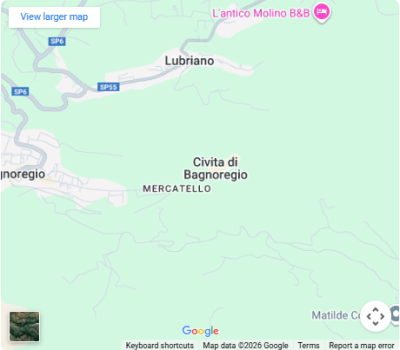
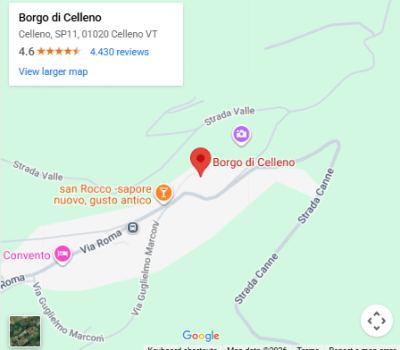
Perched quietly in the countryside of Celleno, this abandoned medieval village—often called “the ghost town of Lazio”—offers one of the region’s most atmospheric and unusual travel experiences. Borgo di Celleno is a place where history feels suspended rather than lost.
🏰 A Village Frozen in Time
Unlike restored historic towns, Celleno retains a raw, untouched character. Once an Etruscan settlement, the village was abandoned after earthquakes, leaving behind crumbling medieval structures, narrow silent streets, and panoramic countryside views. The Orsini Castle remains intact with its majestic single-arched bridge and preserved drawbridge. The Telegraph listed Celleno among the 25 most beautiful ghost towns in Italy, and it was featured in the Netflix series Luna Nera.
It’s not polished—and that’s exactly the appeal.
Beyond its haunting atmosphere, the surrounding area is known for local olive oil production and local honey, reflecting the region’s agricultural resilience. Even here, life quietly continues.
🌉 The Wooden Walkway Experience
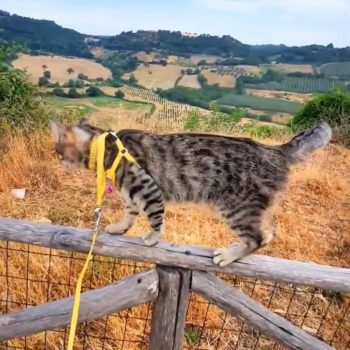
Just outside the village, a wooden walkway offers one of the most memorable perspectives of Celleno: elevated views over the surrounding landscape, a quiet almost meditative atmosphere, and a perfect balance between eerie and peaceful.
Here, the mood shifts. The silence becomes calming rather than unsettling—and even Gigia paused to observe rather than conquer.
🚶 Hiking & Nearby Attractions
For those who enjoy walking, a hiking trail from Celleno to Sant’Angelo di Roccalvecce (2-hour loop) passes through the abandoned village, Orsini Castle, and the “Fairy Tale Village” with storybook murals of Alice, Don Quixote, and the Little Prince.
✨ Why Visit Celleno
Celleno is ideal for travelers seeking unusual, off-the-beaten-path destinations, atmospheric photography locations, and a slower, reflective travel experience. It pairs particularly well with nearby hidden places in Lazio and lesser-known villages, including Celleno Vecchia — the older abandoned core of the village.
🐱 Traveling with a Cat in Celleno
This type of location can work well for cat travel—with some caution:
Pros:
- Very low crowds
- Quiet environment
- Open exploration space
Considerations:
- Uneven terrain and unstable structures
- Lack of facilities
- Exposure to weather conditions
For broader planning, see traveling Italy with a cat.
For accommodation nearby, explore cat-friendly hotels in Italy or our guide to how to find truly cat-friendly accommodation in Italy.
🌟 Celleno, Reimagined
Celleno doesn’t try to entertain. It invites you to slow down, observe, and experience a place where time has loosened its grip.
And sometimes, that creates something more memorable than any fully restored destination.
For more Italy ghost towns to visit and hidden gems, explore our Lazio region page.
📚 More Resources for Your Cat-Friendly Italy Trip
Explore
Civita Di Bagnoregio (VT)

🏛️ Civita di Bagnoregio: The “Dying Town” That Still Steals the Show
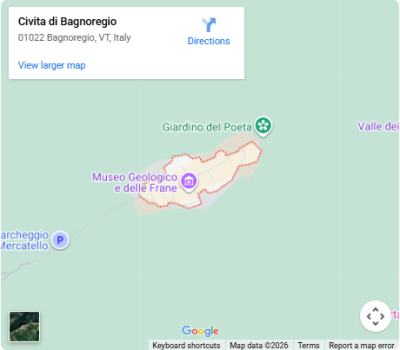
Perched dramatically above a fragile valley, this extraordinary hilltop village in Civita di Bagnoregio is one of Italy’s most iconic—and surreal—destinations. Often called “the dying town” due to the slow erosion of the surrounding cliffs, Civita is accessible only via a pedestrian bridge, creating a sense of arrival that feels both cinematic and slightly unreal.
🌄 A Village Suspended Between Sky and Earth
Civita’s appeal lies in its contrasts: ancient stone buildings clinging to crumbling rock, panoramic views stretching across the Valle dei Calanchi (clay badlands eroding at 7cm/year), and a quiet atmosphere interrupted only by footsteps and wind. The Porta di Santa Maria serves as the main entrance gate with its loggia and stone lions. It is not just beautiful—it is fragile, atmospheric, and unforgettable.
⛪ A Cultural Pause at Chiesa di San Donato
At the heart of the village stands the historic Chiesa di San Donato, a quiet anchor in an otherwise surreal landscape. Inside, Romanesque architecture meets Renaissance details, and a wooden crucifix linked to the school of Donatello (15th century) commands attention. There is also a fresco attributed to Pinturicchio.
Nearby, the Grotta di San Bonaventura — originally an Etruscan chamber tomb — is where St. Francis of Assisi miraculously healed young Giovanni di Fidanza (who later became St. Bonaventura).
Gigia took full advantage of this pause—stretching across the stone floor like a seasoned art critic. Whether she was appreciating centuries of history or testing the acoustics for future vocal performances remains… unclear.
🍽️ The VIP Table Incident
Then came the moment that redefined the visit. At a fully booked lunch service, the impossible happened: a table appeared.
At Osteria al Forno di Agnese, space was found—somehow—for one small cat and her humans. No negotiation. No waiting list. Just… acceptance. This family-run restaurant with over 1,900 positive reviews on Tripadvisor is known for traditional cuisine including wild boar pappardelle and homemade pasta — and, apparently, feline diplomacy.
Whether Gigia charmed, hypnotized, or silently demanded compliance is still under investigation. But the outcome was clear: in Italy, cats outrank reservations.
✨ Why Visit Civita di Bagnoregio
Civita is ideal for travelers seeking unique, bucket-list destinations; dramatic landscapes and photography; and a blend of history, architecture, and atmosphere. It pairs exceptionally well with nearby hidden Lazio gems like Celleno (ghost town experience).
🐱 Traveling with a Cat in Civita
Civita can be done with a cat—but requires awareness:
Pros:
- Limited traffic (pedestrian-only access)
- Quiet interior streets
- Memorable, unique environment
Considerations:
- Steep drops and exposed edges
- Crowds during peak hours
- Long bridge access
For broader planning, see traveling Italy with a cat.
For accommodation strategy, explore cat-friendly hotels in Italy or our guide to how to find truly cat-friendly accommodation in Italy.
🌟 Civita, Reconsidered
Despite its nickname, Civita does not feel like a place that is disappearing. It feels like a place suspended in time—fragile, yes, but intensely alive in its atmosphere.
And sometimes, that makes it even more powerful.
For more hidden villages in Lazio and unique places to visit, explore our Lazio region page.
📚 More Resources for Your Cat-Friendly Italy Trip
Explore
Rieti (RI)

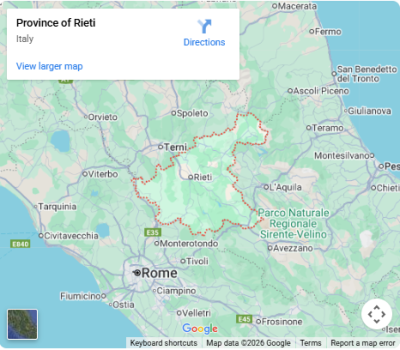
📍 Rieti: Italy’s Geographic Heart and a Cultural Stage for Gigia
Officially recognized as the geographic center of Italy (the “Umbilicus Italiae”), Rieti has long served as a crossroads of civilizations—from ancient Sabine settlements to medieval pilgrims and papal routes. A plaque in Piazza San Rufo marks the spot in 20 languages.
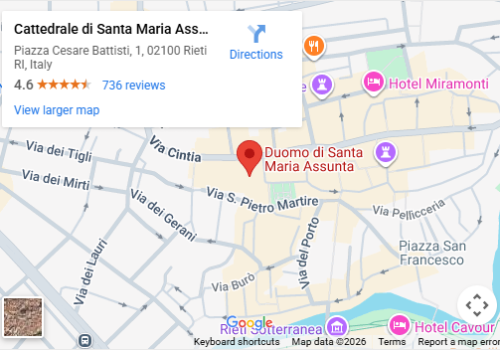
Encircled by 13th-century walls and anchored by a calm, livable historic center, Rieti offers something increasingly rare in Italy: authenticity without overwhelm. The Rieti Cathedral (Cattedrale di Santa Maria Assunta) features Romanesque architecture with Baroque chapels and an ancient crypt, while the beautifully preserved Porta d’Arce (13th-century city gate) stands as a reminder of the town’s medieval past.
📚 A Literary Evening at Le Tre Porte
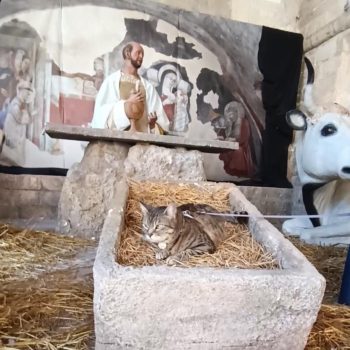
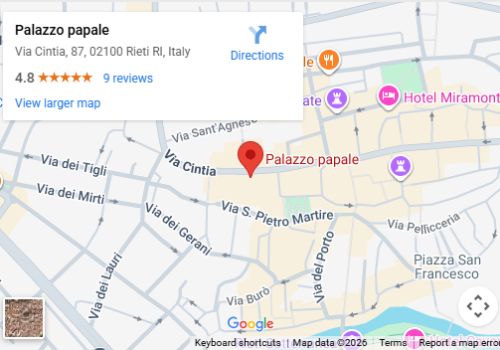
Our visit centered around a special return—to friends, and to a unique cultural venue: Le Tre Porte. Here, Gigia hosted a book presentation that captured the essence of the town: intimate atmosphere, shelves lined with well-loved books, and a community that values conversation as much as cuisine.
The evening unfolded with remarkable ease—guests gathered over glasses of Cesanese wine, while plates of reinvented polpette circulated like quiet ambassadors of local tradition.
🐾 Gigia Meets Her Readers
As always, Gigia approached her public with… standards. High-fives were not guaranteed. Attention was conditional. Approval had to be earned.
Those who understood the rules were rewarded: a gentle paw touch, a moment of connection, a story they would undoubtedly retell. Those who rushed in too quickly learned an equally valuable lesson.
✅ Why Rieti Works (Especially with a Cat)
Rieti offers a very different Lazio experience compared to Rome: slower pace and lower density, walkable historic core, less traffic and noise, and a strong sense of local community. For travelers with cats, this translates into less stress, more control, and better quality of stay.
🌿 Beyond Rieti: The Sabine Hills
Just east of Rieti, the Sabine Hills (Sabina) unfold into a landscape of olive groves, medieval villages, and quiet country roads. Unlike the crowded hill towns of Tuscany or Umbria, Sabina remains remarkably under the radar — yet it’s less than an hour from Rome by train.
The area is defined by its unhurried rhythm. In Farfa, life centers around the ancient Benedictine abbey, one of the most important monastic complexes in Italy. In Toffia and Roccantica, narrow stone streets open onto panoramic terraces overlooking the Tiber Valley. Poggio Mirteto hosts a lively Saturday market where locals sell fresh ricotta, seasonal vegetables, and olive loaves. The Cantalupo market (Thursdays) offers a smaller, more local experience.
Sabina is also one of Lazio’s most important olive oil regions — the Sabina DOP extra virgin olive oil has been produced here since Roman times. Spring brings wild asparagus, artichokes, and fields of red poppies. It’s a place for slow mornings, long lunches, and evenings that stretch without urgency.
For travelers based in Rome, the Sabine Hills offer the perfect low-stakes escape — close enough for a day trip, but quiet enough to feel completely disconnected from city pace.
🗺️ A Strategic Stop in Lazio
Rieti fits perfectly into a broader central Italy itinerary. It pairs naturally with Rome (urban base), Civita di Bagnoregio (dramatic landscapes), and Sabine countryside villages (low-tourism exploration).
For structured planning, see our cat-friendly Rome & Lazio itinerary guide.
🌟 More Than a Destination
Rieti doesn’t compete with Italy’s major cities. It doesn’t need to. Its strength lies elsewhere: in evenings that feel personal, in conversations that extend beyond travel, in spaces where literature, food, and community intersect naturally.
And, occasionally… in a cat quietly deciding who deserves a high-five.
For more hidden towns in Lazio and unique places to visit, explore our Lazio region page.
📚 More Resources for Your Cat-Friendly Italy Trip

Rome
🏛️ Rome: The Eternal City as a Modern Base for Cat-Friendly Travel
Few destinations require less introduction than Rome—yet every traveler experiences a different version of the Eternal City. From Gigia’s perspective, Rome was not just a collection of landmarks, but a fully functioning urban environment—one that revealed how a historic capital can adapt to modern, pet-inclusive travel when approached strategically.
👣 Beyond Landmarks: A City Experienced at Ground Level
While visitors naturally gravitate toward icons such as the Trevi Fountain (Rome’s largest Baroque fountain, built 1732-1762, now requiring a €2 ticket for access) [citation:1], the Pantheon (ancient Roman temple built in 126 AD, now a Catholic church) [citation:4], and the Colosseum (the largest amphitheatre ever built, completed in 80 AD) [citation:5], Gigia’s experience focused elsewhere: walkability and street-level rhythm, noise patterns and crowd flow, and hospitality standards in real-world conditions. Rome, in this sense, becomes less of a postcard—and more of a system to navigate.
📖 From Tourist to Headliner: The COIN Event
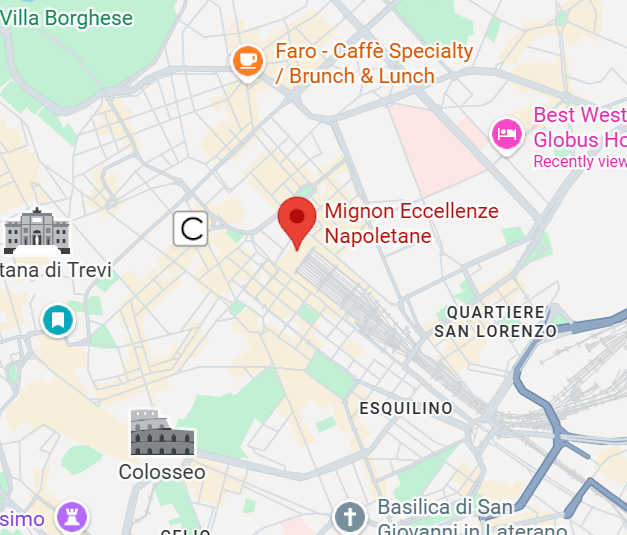
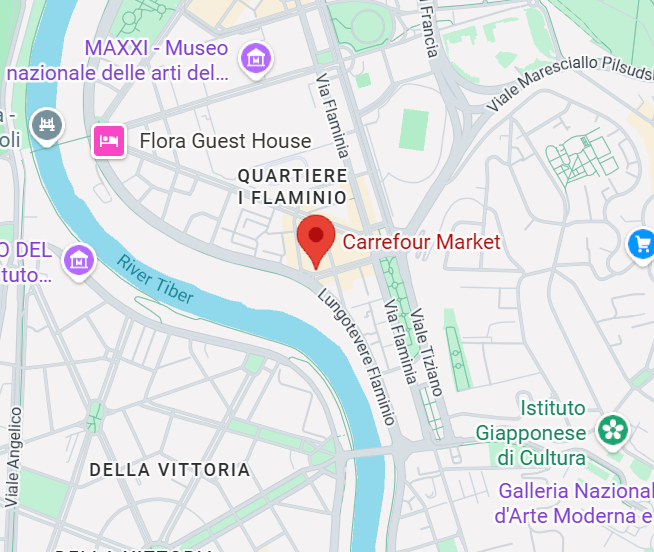
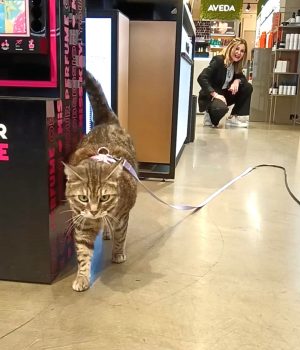
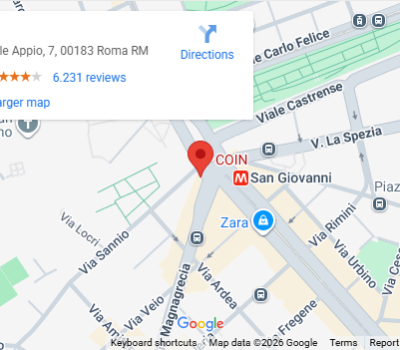
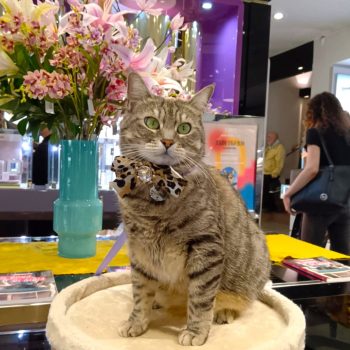
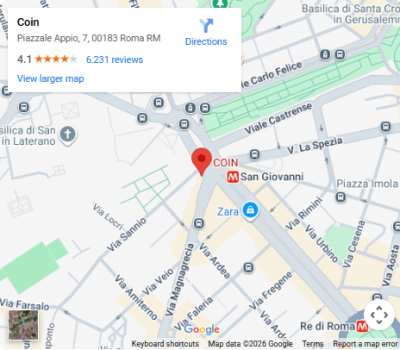
Gigia’s relationship with Rome moved beyond exploration into visibility. At COIN Department Store, she hosted a book presentation that drew readers, media, and curious onlookers—marking a shift from traveler to featured presence.
Set within a contemporary retail environment, the event demonstrated something important: Rome is not only historical—it is operational, commercial, and culturally responsive. For Gigia, it became a professional stage as much as a destination.
✅ Where Rome Works (and Where It Doesn’t)
Rome can absolutely work for cat travel—but only with the right approach. The difference lies in neighborhood selection.
More manageable areas typically offer lower traffic intensity, residential street patterns, easier building access, and reduced nighttime noise. Choosing correctly transforms Rome from overwhelming to highly livable.
For detailed strategy, see where to stay in Italy with a cat. For a deeper dive into Rome-specific accommodation, explore our Booking Cat-Friendly Hotels in Rome: The 2026 Expert Guide.
For deeper neighborhood breakdowns, explore how to choose quiet neighborhoods in Italian cities.
🗺️ Rome as a Strategic Base
Rome’s real advantage is not just what it contains—but what it connects to. From here, you can easily access Civita di Bagnoregio (dramatic hilltop village), Sabine countryside towns (low-density exploration), and lesser-known Lazio destinations like Celleno.
This makes Rome an ideal hub-and-spoke base for central Italy. For structured planning, see our cat-friendly Rome & Lazio itinerary guide.
🏨 A City That Adapts
Rome is often described as eternal—but what matters more is that it evolves. Through modern hospitality, flexible accommodation options, and increasing openness to pet travel, it has become not just a historic icon, but a functional base for long-stay, experience-driven travel.
For a complete overview of cat-friendly hotels in Italy, explore our accommodation hub. And for full travel preparation, start with traveling Italy with a cat.
For more hidden villages in Lazio and unique places to visit, explore our Lazio region page.