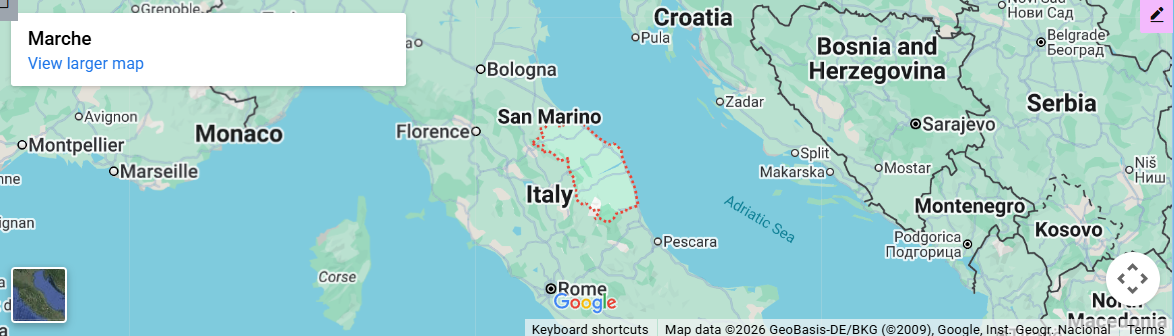
Umbria, Italy: Medieval Towns, Nature & Slow Travel
Often called the Green Heart of Italy, Umbria is a region of rolling hills, ancient forests and timeless villages where life moves at a slower, more deliberate rhythm.
Compared with nearby Tuscany, Umbria is generally quieter and less visited, with historic towns, rural landscapes and local traditions that reward travellers willing to explore beyond Italy’s best-known destinations.
If you’re searching for a quieter side of Italy, Umbria is an excellent place to start.
🌄 Why Visit Umbria?
Umbria offers a rare balance of:
- Medieval hill towns that remain quieter than Italy’s best-known destinations
- Lush landscapes of forests, valleys and rivers
- Rich culinary traditions rooted in the land
- A slower, more immersive travel experience
This is a region designed for slow travel, where every village invites you to pause — and perhaps stay longer than planned.
🐾 A Journey Marked by the Unexpected
Every journey has its defining moment.
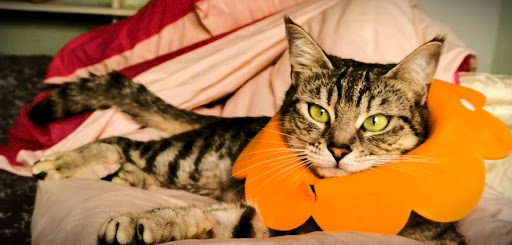
In Umbria, ours came in the form of an unexpected veterinary visit in Terni.
What could have been stressful turned into something else entirely — a reminder of the warmth and professionalism found even in smaller Italian towns.
Gigia, of course, handled the situation with composure (and strategic charm).
🌳 Landscapes of Hills, Forests & Hidden Corners
Umbria’s beauty is quiet but powerful:
- Rolling green hills stretching across the countryside
- Dense forests rich in truffles
- Peaceful valleys and rivers
- Hilltop villages rising above the surrounding landscape
Places like Arrone reveal a quieter side of the region, while Gubbio, Spoleto and Narni preserve remarkable layers of medieval and Roman history. Across Umbria, historic hill towns, forested slopes and river valleys make every part of the landscape worth exploring.
🍷 Umbria’s Food: Simple, Bold, Unforgettable
Umbrian cuisine reflects its landscape — rustic, rich and deeply satisfying.
Highlights include:
- Black truffles from the region’s forested hills
- Locally produced wines
- The unmistakable porchetta
Gigia, naturally, took her role as food inspector seriously.
🏛️ Timeless Towns to Explore
Umbria’s appeal lies in the variety of its towns, each with its own history, architecture and character:
- Gubbio – dramatic medieval architecture and the spectacular Piazza Grande
- Spoleto – grand architecture and dramatic views
- Narni – layered history and underground wonders
- San Gemini – elegant and quietly refined
- Amelia – ancient walls and a legendary feline legacy
- Arrone – a small village surrounded by the landscapes of Valnerina
- Terni – gateway to the spectacular Marmore waterfalls
Each offers a different perspective — and a reason to explore beyond the obvious.
✨ One of Italy’s Most Underrated Regions
Despite its wealth of history, scenery and culinary traditions, Umbria remains less visited than Tuscany.
That is precisely its strength.
Here, you’ll find:
- Fewer crowds in many of its historic towns
- Rich local traditions and a strong sense of place
- Opportunities to explore beyond the familiar tourist routes
Travel here feels less like ticking off famous landmarks and more like discovering a different side of Italy.
😺 Gigia’s Umbria
For Gigia, Umbria was a land of contrasts:
- Unexpected challenges
- Excellent food opportunities
- Quiet villages to explore
- And perfectly placed sunbeams
From hilltop towns to hidden valleys, every stop was inspected.
Each location includes Gigia-tested insights, local spots and feline-approved observations.
🐾 Planning Your Umbria Trip
For more guidance, explore:
Explore nearby regions:
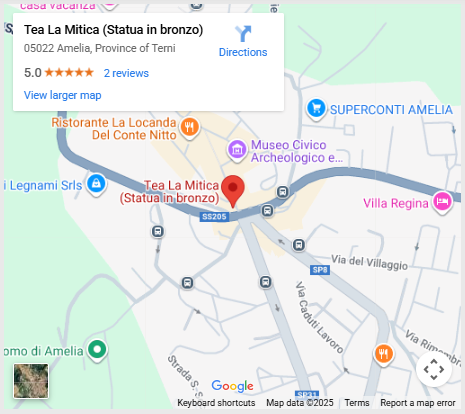
Amelia (TR)
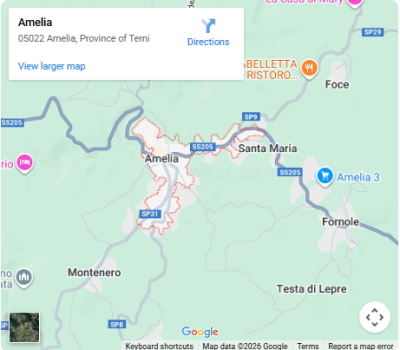
🐾 Amelia (TR): An Umbrian Hill Town with a Feline Legacy
Nestled in the rolling hills of Umbria, Amelia is a town layered in history—where ancient Etruscan walls meet medieval streets and Renaissance facades.
But beyond its architectural beauty, Amelia holds something rarer: a story that lives on through a cat.
🐾 Tea: The Cat Who Became a Legend
Long before Gigia arrived, Amelia belonged to Tea.
Born into a local colony but embraced by the entire town, Tea lived between worlds:
- part independent wanderer
- part beloved local figure
She held daily court at Porta Romana, charming:
- children with gelato
- locals over espresso
- and anyone willing to pause
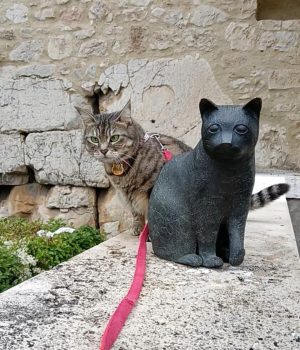
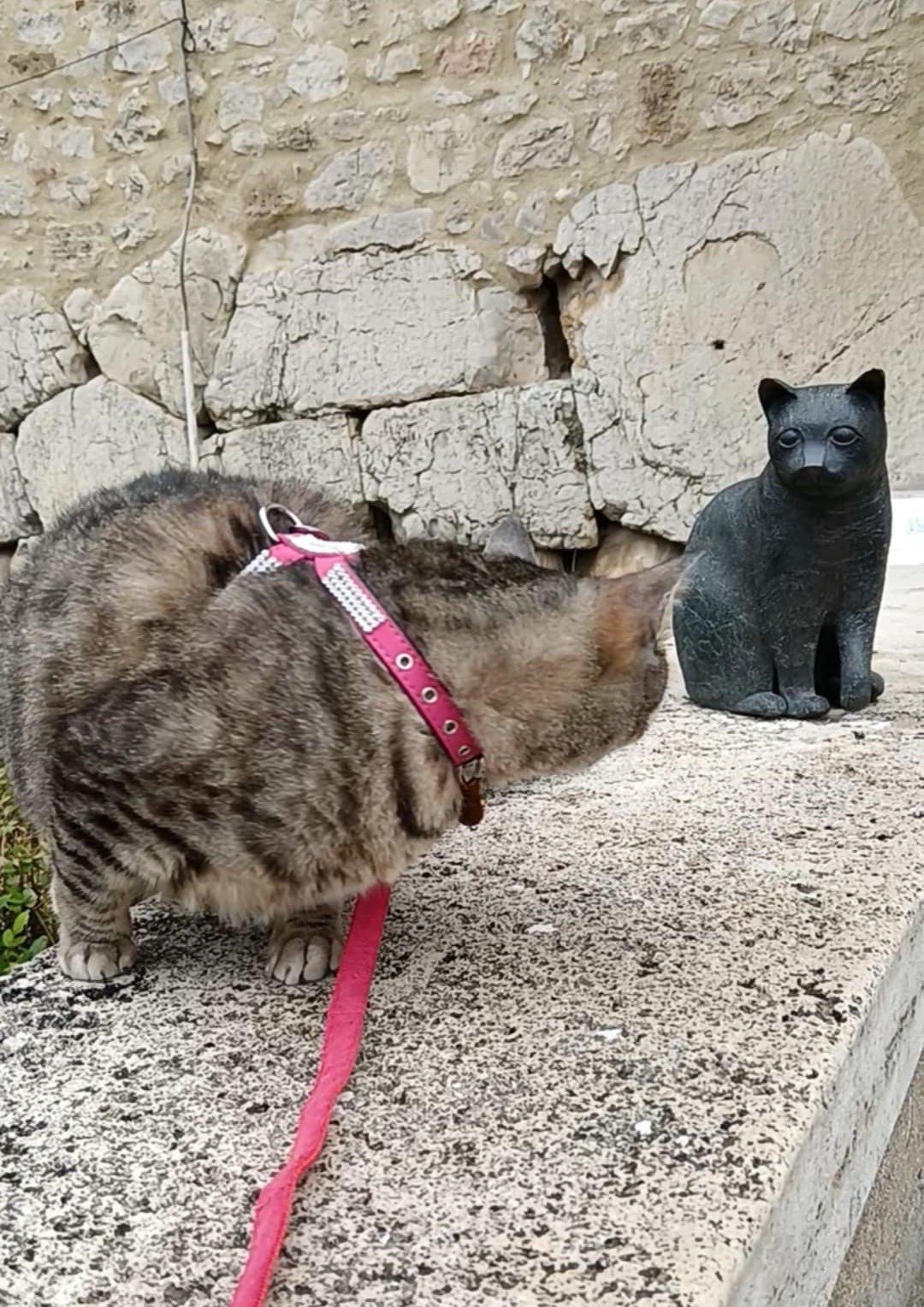
Today, her presence endures in her bronze statue—captured mid-stretch on a sun-warmed wall.
😼 Gigia Meets Tea
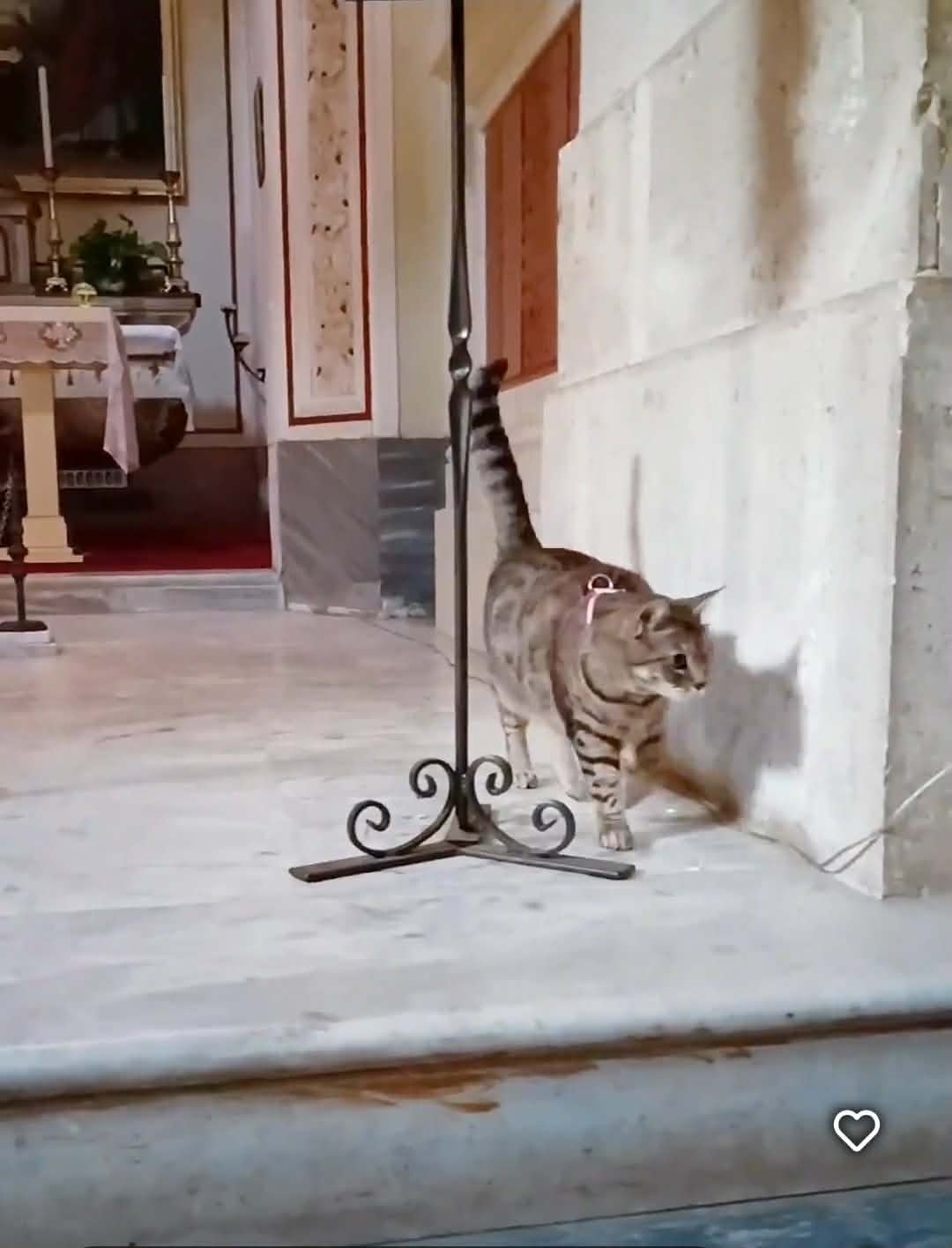
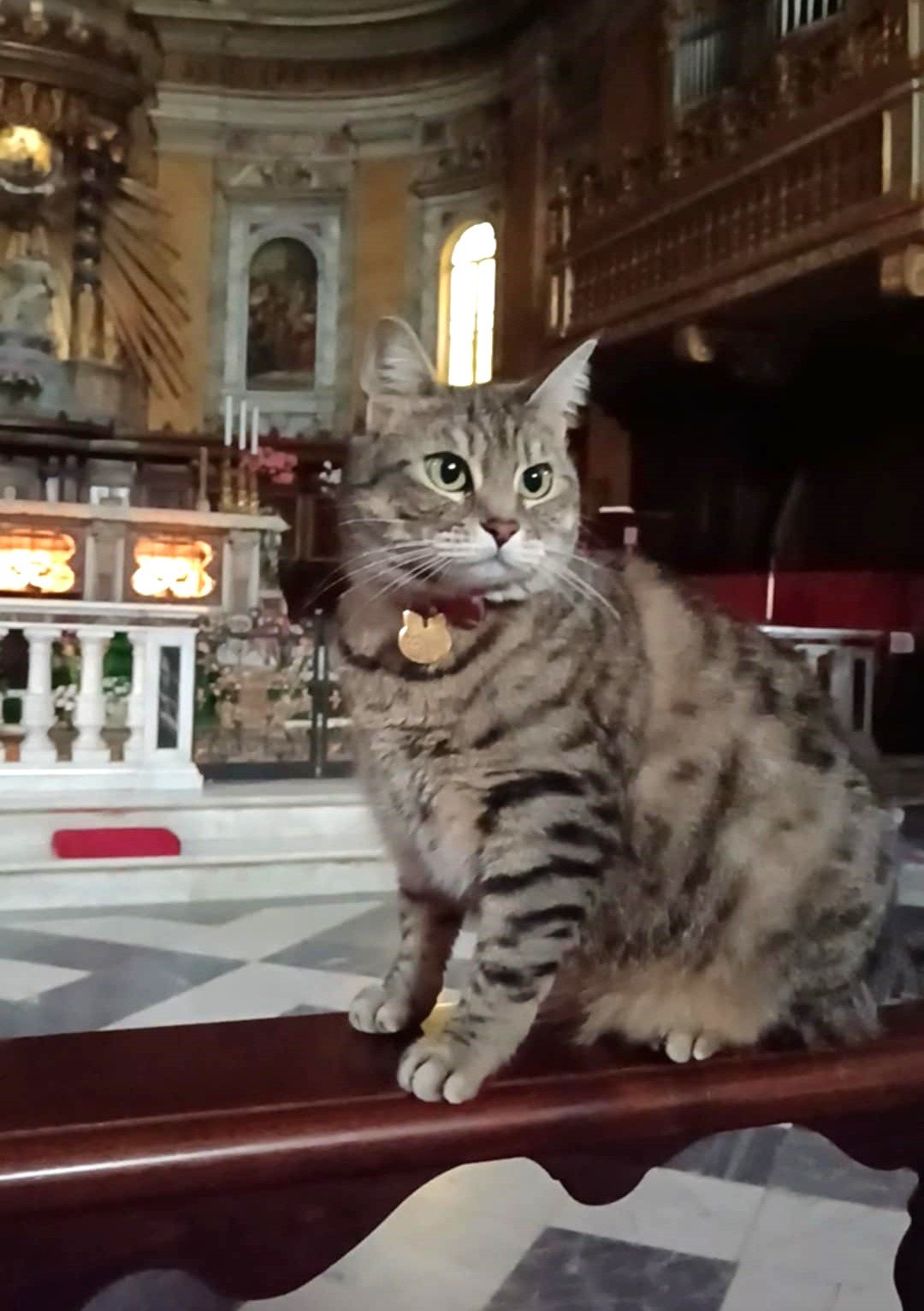
When Gigia encountered Tea’s likeness, there was a moment of quiet evaluation.
A pause.
A flick of the tail.
A shared understanding.
Then, naturally, Gigia decided it was the perfect setting for a photo.
📍 What to See in Amelia
Beyond Tea’s story, Amelia offers a rich historical setting:
- Ancient walls and gates dating back to pre-Roman times
- Medieval alleyways winding through the historic center
- Piazza Vera, the town’s elegant heart
- Quiet cafés and pasticcerie where daily life unfolds slowly
👉 This is authentic Umbria—far from the crowds, deeply rooted in tradition.
✨ A Living Story
Tea’s legacy is not confined to her statue.
It lives on:
- in the sunlight pooling where she once napped
- in a children’s book dedicated to her adventures
- in a QR code at her monument, sharing her story with visitors
Amelia reminds us that the soul of a place is not just built in stone—but carried in memory.
✅ What Amelia Offers
- Ancient Etruscan walls and gates
- Medieval alleyways and Renaissance facades
- Quiet piazzas and local pasticcerie
- A unique feline literary legacy
🐾 For Cat Travel
- ✔ Walkable historic center
- ✔ Low tourist density
- ✔ Quiet cafés with outdoor seating
- ✔ Calm, reflective atmosphere
🌅 Why Visit Amelia
Amelia is ideal for travelers seeking:
- hidden gems in Umbria
- quiet hill towns in Italy
- authentic local culture
- slow travel experiences
It’s a place where history feels personal—and stories linger.
Practical Tips for Amelia with a Cat
Gigia’s Final Verdict
“Strong historical foundation. Excellent sun distribution. Local feline legacy… respected. Amelia, you have been inspected. Your walls are adequately ancient. Your piazzas are suitably elegant. And Tea… Tea set a high bar. I acknowledge her contribution. Recommend returning — perhaps when the pasticceria has more tuna options.”
For more information about Amelia and its feline legacy, visit the official Amelia municipal site and the Umbria Tourism – Amelia page.


Arrone (TR)

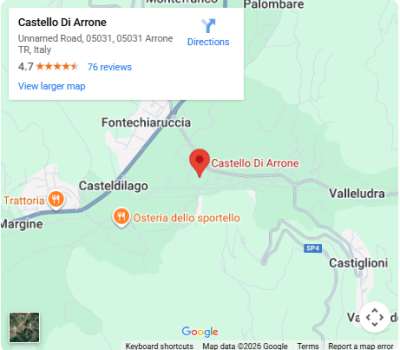
🏔️ Arrone (TR): A Hidden Medieval Village in Valnerina
Perched dramatically above the Valnerina, Arrone rises like a stone fortress suspended between sky and earth.
Built from warm golden rock, this medieval village feels almost untouched by time—far from the main tourist routes and rich in atmosphere. For those exploring hidden villages in Umbria, Arrone offers one of the most authentic experiences.
🌄 A Village Between Nature and History
Arrone unfolds as a quiet labyrinth:
- narrow staircases winding through the historic center
- Gothic arches framing sudden valley views
- ancient doorways etched with centuries of history
Below, the Nera River winds through the valley, while the distant peaks of the Sibillini Mountains rise on the horizon. For more information about the region, visit the official Valnerina tourism site.
👉 This is one of the most scenic corners of Umbria—ideal for travelers seeking nature, silence, and authenticity.
🐾 Gigia’s Grand Tour (Against Medical Advice)
Arrone also became the setting for one of Gigia’s most determined adventures.
Freshly recovering from surgery—under strict instructions to rest—she had other plans.
Step by step, she:
- explored steep stone paths
- inspected hidden corners
- ignored every increasingly desperate “no”
To her, this wasn’t recovery.
It was exploration.
😼 A Feline Explorer at Work
From ancient washhouses to shadowy alleyways, Gigia moved with purpose—as if the entire village had been built for her personal inspection.
“The wounds? Irrelevant,” she seemed to declare.
“History requires supervision.”
📍 What to See in Arrone
While small, Arrone offers a rich experience:
- Historic upper town with medieval architecture
- Panoramic terraces overlooking Valnerina
- Walking paths and nature trails nearby
- Easy access to waterfalls and outdoor activities in the region
👉 Often combined with visits to nearby natural sites, Arrone is perfect for slow travel in Umbria.
✅ What Arrone Offers
- Historic upper town with medieval architecture
- Panoramic terraces overlooking Valnerina
- Walking paths and nature trails nearby
- Easy access to waterfalls and outdoor activities
🐾 For Cat Travel
- ✔ Low tourist density
- ✔ Quiet, immersive atmosphere
- ✔ Harness essential for steep paths
- ✔ Supervise near terraces and edges
✨ Why Visit Arrone
Arrone is ideal if you’re looking for:
- hidden villages in Umbria
- off-the-beaten-path Italy
- medieval towns surrounded by nature
- quiet alternatives to more famous Umbrian destinations
Practical Tips for Arrone with a Cat
Gigia’s Final Verdict
“Challenging terrain. Excellent verticality. Highly suitable for unauthorized expeditions. Arrone, you have been inspected — against medical advice, naturally. Your staircases are steep but rewarding. Your valley views are suitably dramatic. Your ancient washhouses have been evaluated. Recommend returning when not recovering from surgery — though the recovery itself was surprisingly eventful.”
For more information about Arrone and the Valnerina valley, visit the official Arrone municipal site, the Valnerina tourism site, and the Nera River Park official website.
Gubbio (PG)

🏰 Gubbio (PG): Medieval Stone, a High-Wire Act and a Ticket Office Refusal
Gubbio is one of Umbria’s most striking medieval towns. Set against the foothills of the Apennines, it is a dramatic arrangement of grey limestone buildings, steep cobbled streets, Gothic palaces and monumental squares. Its history reaches back to the ancient Umbrian and Roman periods, but it is the remarkably preserved medieval centre that gives Gubbio its distinctive character.
🧗♀️ Piazza Grande: The High Road and the Ticket Office
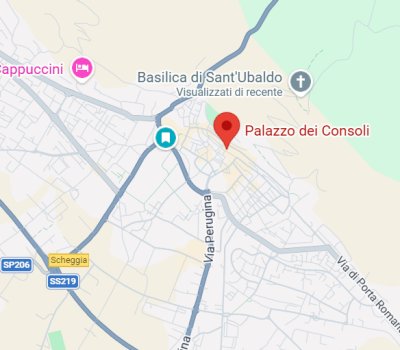
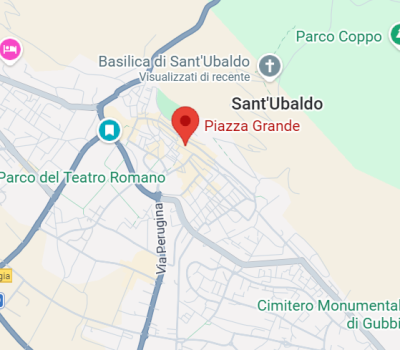
The natural starting point is Piazza Grande, Gubbio’s extraordinary suspended square. Built on an artificial terrace, it commands sweeping views across the rooftops and surrounding countryside. One side is dominated by the imposing Palazzo dei Consoli, a Gothic landmark constructed between 1332 and 1338. Today, it houses the Civic Museum, including the famous Iguvine Tablets: seven bronze tablets inscribed in the ancient Umbrian language.
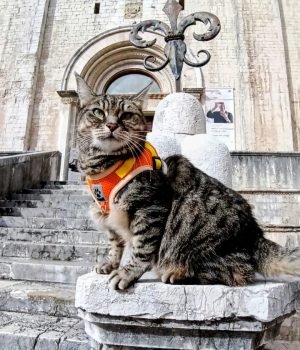
Gigia, meanwhile, had other priorities. Rather than simply admire the architecture, she spotted a narrow stone parapet and decided to test her balancing skills. With the confidence of a seasoned high-wire performer, she made her way along it, while a nun and several pedestrians watched from below. The medieval setting was clearly an excellent stage for her next performance.
Having conquered the parapet, she proceeded to the museum ticket office. Unfortunately, her application for admission was rejected. The explanation? She was classified as a “pseudo child”. Gigia was not impressed. She turned away with the unmistakable expression of someone who had just been denied access to a cultural institution on questionable grounds.
👑 Piazza Grande: A Wounded Pride Restored
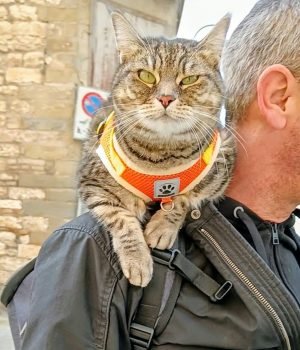
Fortunately, Gubbio was not short of admirers. As Gigia continued her visit, a small crowd gathered around her. Locals and visitors stopped to admire her, take photographs and exchange a few words. Her wounded pride recovered remarkably quickly. The museum might not have recognised her artistic credentials, but the public clearly had.
🚡 The Funivia and the Festa dei Ceri
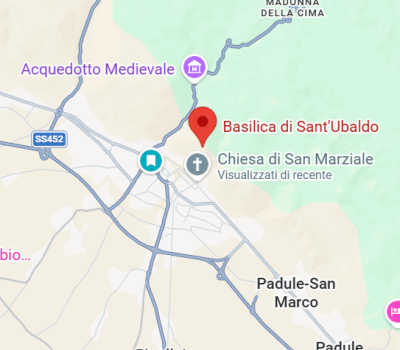
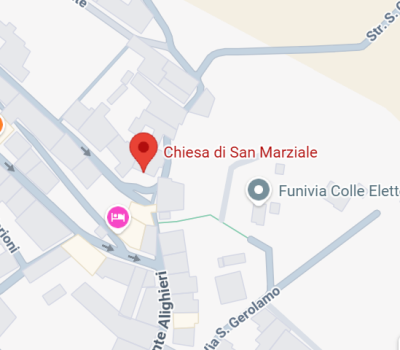
For a different perspective on Gubbio, the Funivia Colle Eletto climbs from the town towards the Basilica of Sant’Ubaldo on Monte Ingino. The journey takes around six minutes in small, open-sided, two-person cars resembling suspended birdcages. It is an unusual way to reach the mountain sanctuary, although anyone travelling with a cat should check the operator’s current pet rules and consider the safety of the open cabins before making plans.
Gubbio is also famous for the Festa dei Ceri, held every year on 15 May. Three enormous wooden structures, each topped by the statue of a saint, are carried through the streets by teams of runners known as ceraioli, racing towards the Basilica of Sant’Ubaldo. The tradition is documented as far back as 1160 and remains one of Umbria’s most spectacular annual celebrations. It is a remarkable event to witness, but the crowds, noise and fast-moving procession are not suitable conditions for bringing a cat.
🍝 A Taste of Gubbio
Gubbio’s cuisine is firmly rooted in Umbrian tradition. Local specialities include tagliatelle with truffles, crescia (a traditional flatbread) and friccò, a rich meat stew often served with local bread. The surrounding countryside is also known for its truffles, mushrooms and regional wines. Gigia, naturally, concentrated on the sightseeing rather than the truffle menu.
✨ Why Visit Gubbio?
Gubbio deserves a place on any itinerary exploring medieval towns in Umbria. Its monumental architecture, steep lanes, panoramic squares and deep-rooted traditions make it particularly rewarding for travellers interested in history and local culture. Piazza Grande alone is worth the visit, while the Palazzo dei Consoli and the views towards Monte Ingino add further reasons to linger.
🐾 Visiting Gubbio with a Cat
- Steep streets: Gubbio’s historic centre has cobbled slopes, steps and uneven stone paving. A secure harness and lead are useful, but a well-fitted carrier is a sensible alternative for the more demanding stretches.
- Piazza Grande: The square is spacious, but its elevated position and exposed edges call for close supervision. Keep your cat securely harnessed and away from the parapets.
- Museums: Do not assume that cats are admitted. Check the current access rules with the museum before visiting; Gigia’s experience at the ticket office suggests that even an exceptionally well-behaved feline visitor may not qualify.
- Funivia: Check the operator’s latest pet policy and assess the open cabins carefully before considering the journey with a cat.
- Festa dei Ceri: The celebrations attract large crowds and involve considerable noise and movement. Enjoy the event without bringing your cat into the procession or its busiest areas.
- Travel equipment: For advice on harnesses, carriers and other useful accessories, see our guide to the best cat travel gear.
🐱 Gigia’s Verdict
By the time the afternoon light began to soften over Gubbio’s stone rooftops, Gigia had recovered her dignity. The ticket office incident was clearly behind her. After all, a town with such magnificent architecture and such an appreciative public could hardly be considered a failure.
Gubbio, Umbria, Italy — a medieval town worth exploring, even if its museum has yet to recognise feline talent.
Further information:
Umbria Tourism – Gubbio
Palazzo dei Consoli – Civic Museum
Funivia Colle Eletto



Narni (TR)
📖 Narni (TR): The Real-Life Inspiration Behind Narnia
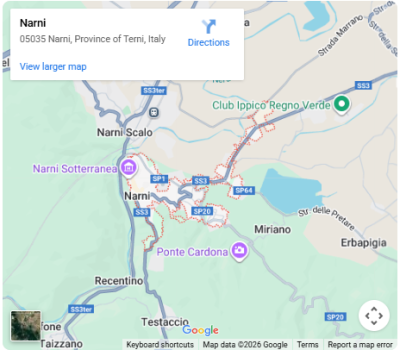
Perched above the Nera valley, Narni is one of Umbria’s most atmospheric medieval towns—famous for inspiring C. S. Lewis in The Chronicles of Narnia.
With its stone streets, hidden passages, and layered history, Narni feels like a place where reality and imagination quietly overlap. For those exploring medieval towns in Umbria, Narni offers a uniquely literary charm.
📜 History Beneath the Surface
Narni’s charm goes far beyond its storybook reputation.
Beneath the town lie:
- ancient Roman ruins
- underground chambers and passageways
- centuries of history carved into stone
Above ground, the historic center unfolds with:
- cobblestone streets
- medieval buildings
- panoramic viewpoints over the valley
Each year, the town comes alive during its medieval festival, when Narni transforms into a living reconstruction of its past. For those interested in the underground city, visit Narni Sotterranea for guided tours.
🐾 Gigia’s Countryside Base
We didn’t come to Narni for literary reasons alone.
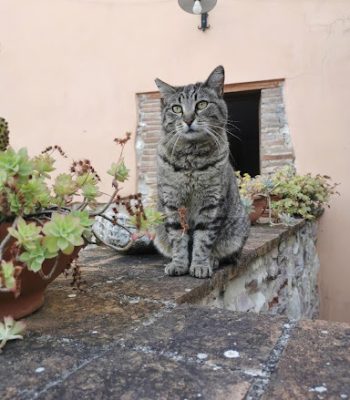
Our base was Montanari Agrivillage — a cozy countryside retreat surrounded by rolling hills and farm life. For those seeking cat-friendly agriturismo in Italy, this area offers excellent options.
Gigia adapted immediately:
- she befriended (or assessed) the local cats
- claimed strategic lounging spots
- and made it clear she was visiting, not relocating
Farm life, yes — but strictly on her terms.
😼 A Cat in a Storybook Town
Narni proved to be the perfect playground:
- quiet alleys to explore
- pigeons to monitor with professional intensity
- sunlit piazzas ideal for observation
While she never found a magical wardrobe, she did something arguably more impressive:
She made the town her own.
📍 What to See in Narni
For visitors, Narni offers a rich mix of culture and atmosphere:
- Historic center with medieval architecture
- Underground Narni (Roman and medieval remains)
- Panoramic terraces over the Nera valley
- Medieval festival (Corsa all’Anello)
- Easy access to countryside stays and agriturismi
👉 A perfect destination for history lovers and slow travelers.
✅ What Narni Offers
- Historic center with medieval architecture
- Underground Narni (Roman and medieval remains)
- Panoramic terraces over the Nera valley
- Medieval festival (Corsa all’Anello)
- Easy access to countryside agriturismi
🐾 For Cat Travel
- ✔ Walkable historic center
- ✔ Quiet alleyways for exploration
- ✔ Countryside retreat options nearby
- ✔ Supervise near terraces and edges
✨ Why Visit Narni
Narni is ideal if you’re looking for:
- medieval towns in Umbria
- literary-inspired destinations in Italy
- hidden gems near Rome
- authentic Italian villages without crowds
Practical Tips for Narni with a Cat
Gigia’s Final Verdict
“No wardrobes detected. Adequate pigeons. Strong mayoral potential. Narni, you have been inspected. Your underground passages are suitably mysterious. Your farm cats have been assessed — friendly, but clearly not of my caliber. Recommend returning during the medieval festival. I would make an excellent monarch.”
For more information about Narni and its surroundings, visit the official Narni tourism site, the Underground Narni (Narni Sotterranea) official site, and the Corsa all’Anello festival page for event dates.
San Gemini (TR)
🏺 San Gemini (TR): Roman Ruins, Medieval Festivals & Mineral Springs
Tucked into the hills of Umbria, San Gemini is a small medieval town with a surprisingly rich identity—famous for its historic mineral water and its proximity to one of central Italy’s most fascinating Roman sites.
🏺 Carsulae: A Forgotten Roman City
What brought us here?
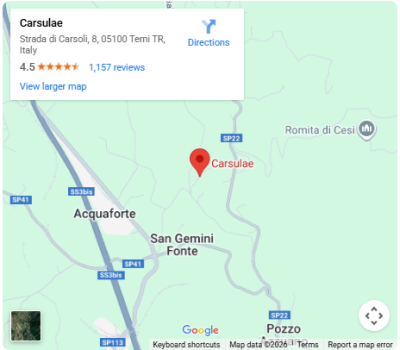
The ancient ruins of Carsulae.
Once a thriving stop along the Via Flaminia, Carsulae today offers an open-air journey through history:
- a Roman forum
- an amphitheatre
- the striking Arco di San Damiano
- quiet paths weaving through centuries-old stone
👉 One of Umbria’s most atmospheric—and least crowded—archaeological sites.
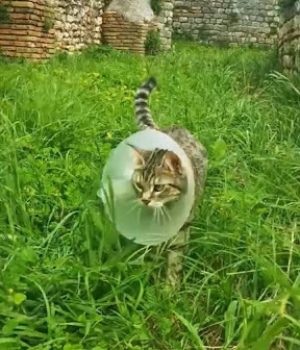
😼 Gigia the Roman General (Cone Edition)
Gigia insisted on exploring Carsulae herself.
There was just one complication:
she was wearing a cone.
Undeterred, she marched through the ruins like a determined Roman commander—cone angled, dignity intact.
“No obstacle,” she seemed to declare,
“should interfere with historical inspection.”
🏰 The Charm of San Gemini
Back in town, San Gemini reveals a different kind of appeal:
- well-preserved medieval streets
- a peaceful, authentic atmosphere
- a long tradition of mineral water production (bottled since the 19th century)
Each year, the town comes alive during the Giostra dell’Arme, a historical festival where locals recreate medieval tournaments with costumes, games, and jousting.
Gigia observed the festivities… from a safe distance.
(Lances, it turns out, are not cat-friendly.)
📍 What to See in San Gemini
- Historic center with stone alleys and quiet piazzas
- Local mineral water heritage
- Easy access to Carsulae archaeological site
- Annual Giostra dell’Arme festival
👉 Ideal for combining history, culture, and slow travel.
✅ What San Gemini Offers
- Well-preserved medieval streets
- Peaceful, authentic atmosphere
- Historic mineral water heritage
- Easy access to Carsulae ruins
- Annual medieval festival
🐾 For Cat Travel
- ✔ Quiet, walkable historic center
- ✔ Low tourist density
- ✔ Outdoor archaeological site (Carsulae)
- ✔ Countryside agriturismo options nearby
✨ Why Visit San Gemini
San Gemini is perfect if you’re looking for:
- Roman ruins in Umbria without crowds
- medieval towns with authentic local life
- unique festivals in Italy
- hidden cultural stops near major routes
Practical Tips for San Gemini with a Cat
Gigia’s Final Verdict
“Strong Roman infrastructure. Questionable medical accessories. Festival weapons… declined. San Gemini, you have been inspected — cone and all. Your Carsulae ruins are suitably ancient. Your mineral water is… wet. Your medieval festival is entertaining from a distance. Recommend returning without the cone — for the amphitheatre, not the jousting.”
For more information about San Gemini and Carsulae, visit the official San Gemini municipal site, the Carsulae archaeological site official website, and the Giostra dell’Arme festival page for event dates.
Spoleto (PG)
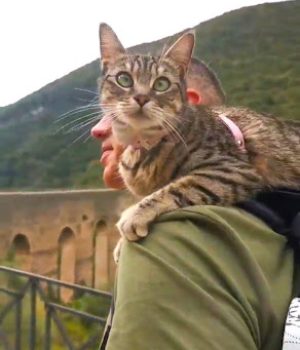
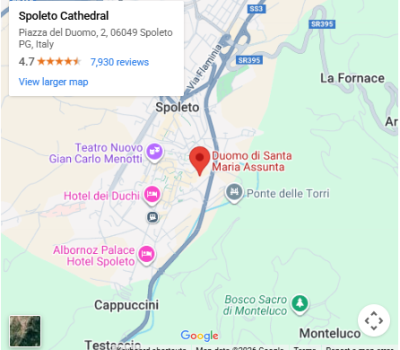
🎭 Spoleto — Festivals, Views & a Cat on the Edge
Spoleto is up there with Italy’s most iconic destinations, and for good reason. Home to the world-renowned Festival dei Due Mondi, its stunning Spoleto Cathedral, ancient Roman Theatre of Spoleto, and the imposing Rocca Albornoziana, this Umbrian hill town is a feast for the eyes. For those exploring best towns in Umbria to visit, Spoleto stands among the most iconic.
But let’s be honest—it’s the porchetta sandwich that truly steals the show. Crisp, herb-infused, and impossibly flavorful, it’s the kind of bite that lingers long after you’ve left.
Gigia, however, had other priorities.
🌉 A Cat on the Edge
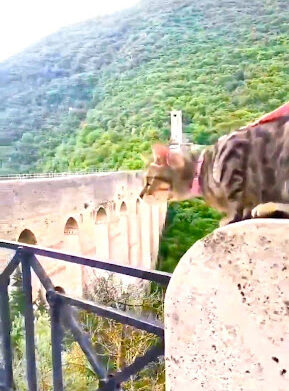
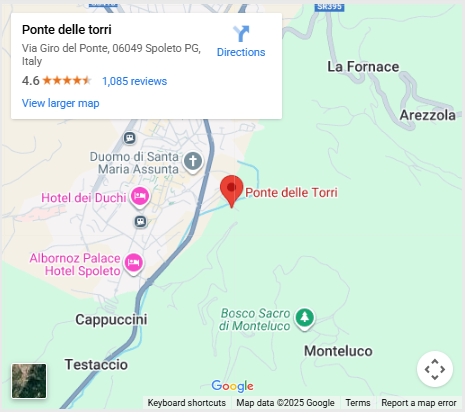
While I was fully committed to my porchetta moment, Gigia decided we needed a dramatic setting—and led us straight toward the breathtaking Ponte delle Torri.
Perched above a vast valley, this medieval aqueduct-bridge is equal parts engineering marvel and vertigo test. Naturally, Gigia selected a viewpoint that felt… unnecessarily close to the edge.
She stood there, calm and composed, tail gently swaying, as if evaluating the structural integrity of the entire valley. Meanwhile, I mentally reviewed every life decision that had brought me to that exact spot.
Gigia? Completely unfazed.
Me? Questioning gravity, balance, and my continued participation in this expedition.
✨ Why Spoleto Stands Out
Spoleto delivers on every level: culture, history, food — and just enough adrenaline to keep things interesting.
Whether you’re:
- admiring world-class art and architecture
- attending a globally renowned festival
- or simply enjoying one of Italy’s best street food experiences
this town has a way of pulling you in.
And if you happen to be traveling with a cat like Gigia?
You’ll discover that Spoleto isn’t just beautiful—it’s a full sensory experience, best enjoyed with a steady footing… and a strong heart.
✅ What Spoleto Offers
- Festival dei Due Mondi (world-renowned arts festival)
- Spoleto Cathedral and Roman Theatre
- Rocca Albornoziana fortress
- Ponte delle Torri aqueduct-bridge
- Famous porchetta street food
🐾 For Cat Travel
- ✔ Walkable historic center
- ✔ Many outdoor piazzas and viewpoints
- ✔ Supervise near edges (Ponte delle Torri)
- ✔ Festival season = higher crowds
Practical Tips for Spoleto with a Cat
Gigia’s Final Verdict
“Spoleto delivers on every level: culture, history, food — and just enough adrenaline to keep things interesting. Your festival is world-class. Your cathedral is suitably grand. Your bridge provides excellent observation points — though your humans may require reassurance. Recommend returning during porchetta season. Priorities.”
For more information about Spoleto, visit the official Spoleto tourism site, the Festival dei Due Mondi official page, and the Ponte delle Torri information. For cathedral details, visit Spoleto Cathedral official site.
Explore

Terni (TR)
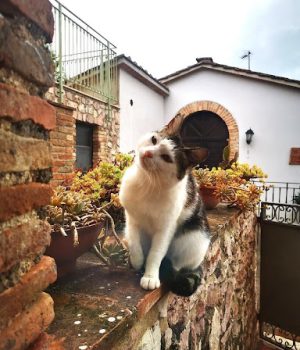
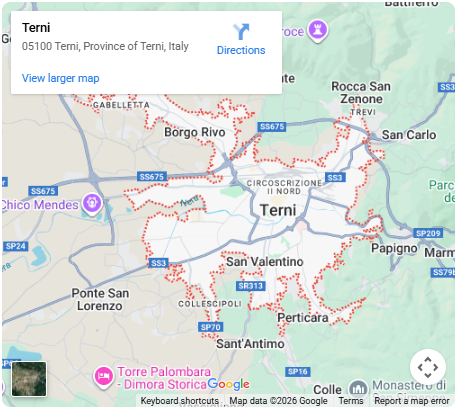
💧 Terni (TR): Waterfalls, St. Valentine & a Feline Comeback Story
Often called the “City of Lovers,” Terni is famously linked to Saint Valentine, whose legacy lives on at the Basilica of Saint Valentine.
But while romance may define its reputation, Terni’s true showstopper is something far more dramatic.
🌊 Cascata delle Marmore: A Man-Made Wonder
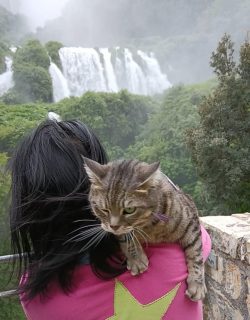
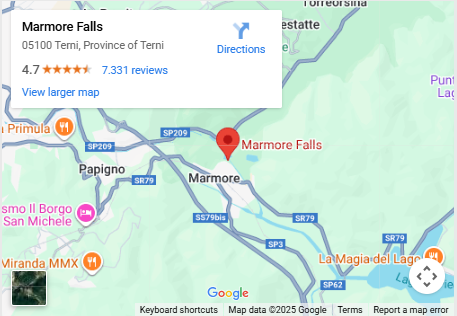
Just outside the city lies the spectacular Cascata delle Marmore—a 165-meter cascade that holds the title of the world’s tallest man-made waterfall.
Originally engineered by the Romans in 271 BC to manage the Velino River, the waterfall is still controlled today, released in powerful flows at scheduled times.
👉 The result: a breathtaking collision of ancient engineering and raw natural force.
🐾 A Different Kind of Miracle
For us, however, Terni will always mean something far more personal.
Not the waterfall.
Not the romance.
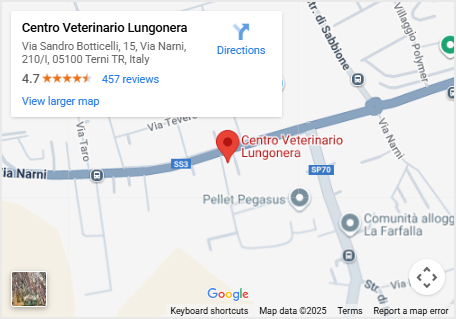
But a veterinary clinic along Lungonera.
After Gigia’s surgery took a worrying turn, this was the place that restored her—from a miserable, cone-wearing patient into her usual mischievous self.
- Gigia: from “waddling satellite dish” → back to full feline authority
- Me: from panic mode → cautiously functional human
No small transformation.
😼 Gigia’s Recovery Tour
Cone and all, Gigia endured Terni with reluctant dignity.
If Saint Valentine is the patron saint of love, then this clinic deserved recognition for something equally powerful:
resilience.
📍 What to See in Terni
Beyond its personal significance, Terni offers:
- Cascata delle Marmore (timed waterfall releases)
- Basilica of Saint Valentine
- riverside walks along Lungonera
- access to nature and outdoor activities in southern Umbria
👉 A destination combining history, engineering, and natural spectacle.
✅ What Terni Offers
- Cascata delle Marmore (world’s tallest man-made waterfall)
- Basilica of Saint Valentine
- Riverside walks along Lungonera
- Access to nature and outdoor activities
- Authentic Umbrian city experience
🐾 For Cat Travel
- ✔ Walkable city center
- ✔ Outdoor waterfall site (Marmore)
- ✔ Timing your visit around waterfall releases
- ✔ Supervise near water edges
✨ Why Visit Terni
Terni is ideal for:
- visiting the Marmore Waterfalls
- exploring lesser-known Umbrian cities
- combining nature with cultural stops
- discovering authentic Italy beyond tourist hotspots
Practical Tips for Terni with a Cat
Gigia’s Final Verdict
“Engineering: impressive. Medical staff: exceptional. Cone: unacceptable. Terni, you have been inspected — cone and all. Your waterfall is suitably dramatic. Your Saint Valentine is… romantic, I suppose. Your veterinary clinic is the real hero. Recommend returning without the cone — and perhaps with a stronger appreciation for the marmore’s engineering.”
For more information about Terni and the Marmore Falls, visit the official Terni tourism site, the Cascata delle Marmore official website (check release schedules), and the Basilica of Saint Valentine for pilgrimage information.