Friuli Venezia Giulia Travel Guide: Italy’s Cultural Crossroads of History, Coastlines, and Hidden Gems
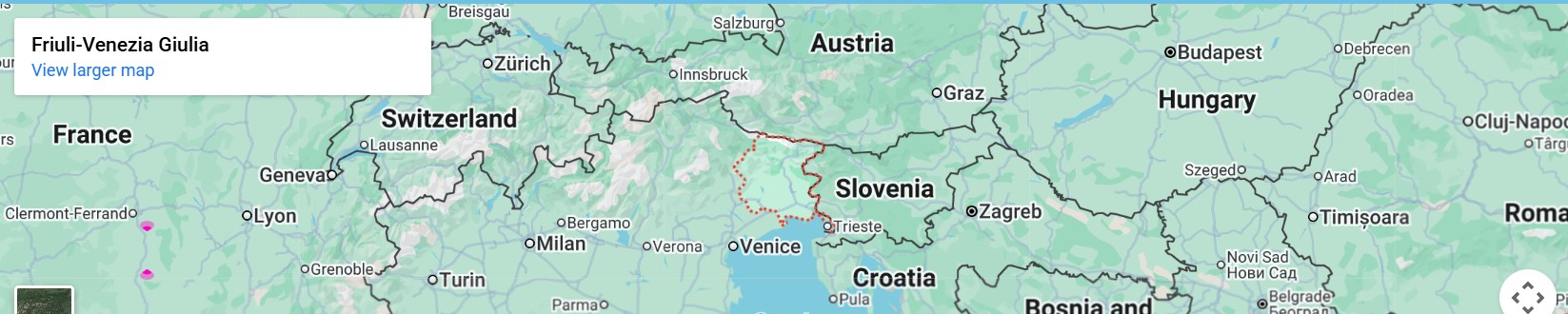
Friuli Venezia Giulia is one of Italy’s most fascinating and underrated regions—a place where Italian elegance, Slavic influences, and Austrian precision blend into something entirely unique.
Bordering Slovenia and Austria, this northeastern corner of Italy offers an extraordinary mix of cultures, landscapes, and traditions. From Roman ruins and medieval villages to Adriatic coastal towns, it delivers an experience of authentic Italy beyond the usual tourist routes.
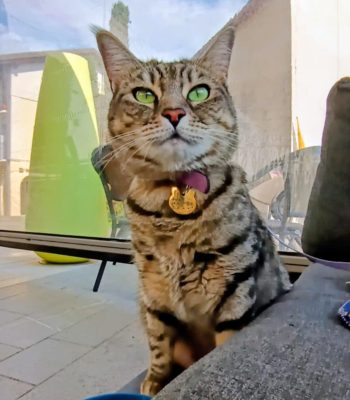
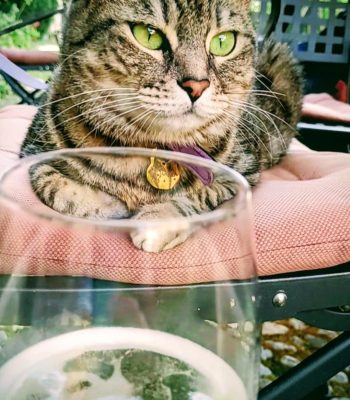
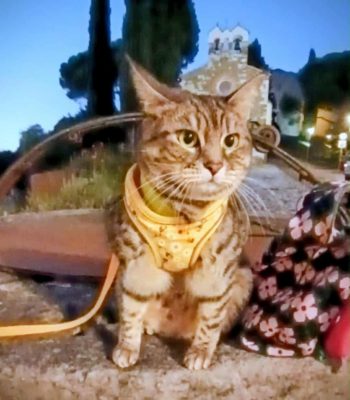
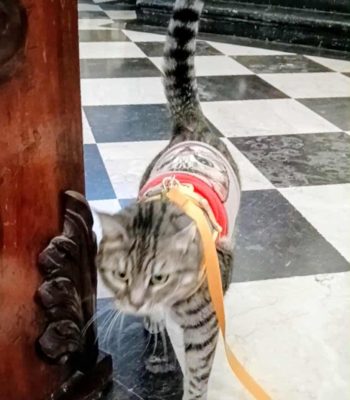
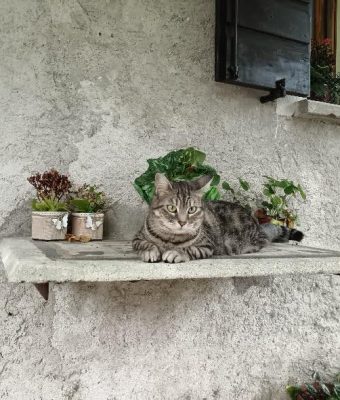
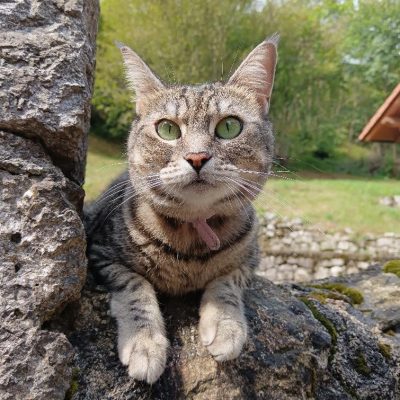
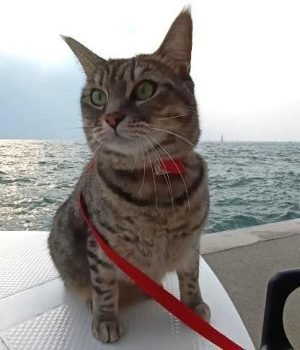
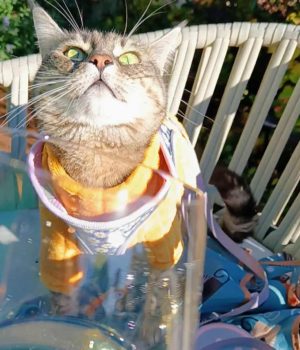
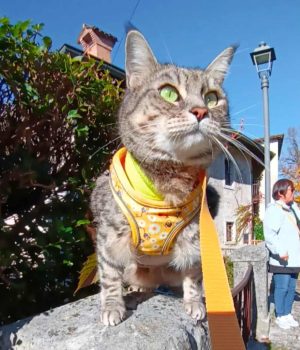
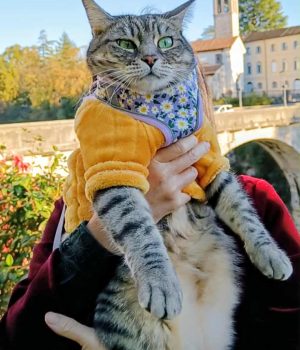
For Gigia, it was less a destination—and more a stage.
A Region of History, Culture, and Contrasts
Few regions in Italy offer such a rich combination of history and geography.
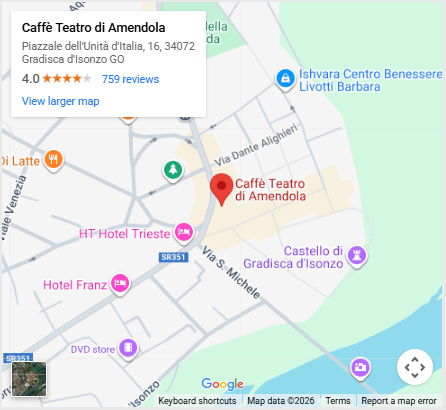
Here, you’ll find ancient Roman cities like Aquileia, once one of the empire’s most important hubs, and the remarkable star-shaped fortress town of Palmanova, a masterpiece of Renaissance military design.
Elegant cities such as Trieste bring a distinctly Central European atmosphere to Italy, while historic villages like Cordovado and Sesto al Reghena preserve a slower, more timeless rhythm.
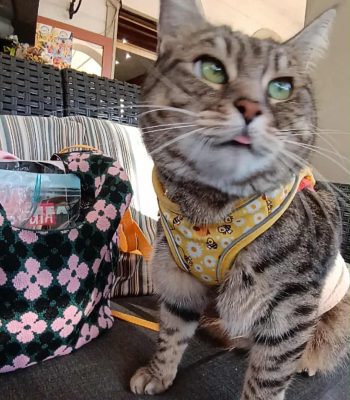
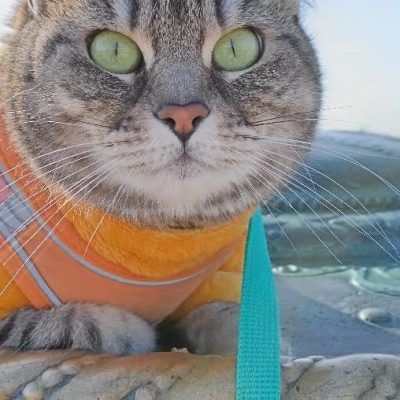
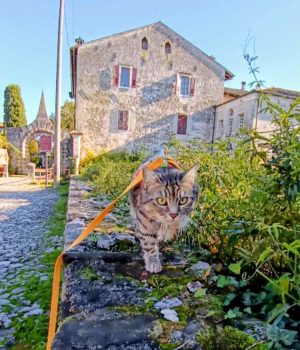
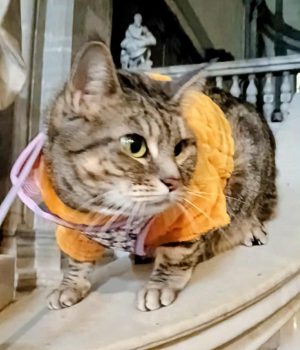
Gigia approached each location with her usual precision—pausing for architectural inspections, sunbeam analysis, and the occasional public appearance that quickly drew admirers.
Coastlines, Mountains, and Hidden Landscapes
Friuli Venezia Giulia is a region of striking natural diversity.
Along the Adriatic coast, towns like Grado offer sandy beaches, seaside promenades, and a relaxed pace of life that even Gigia approved of (provided her paws remained dry).
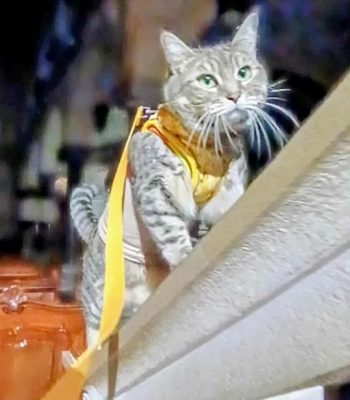
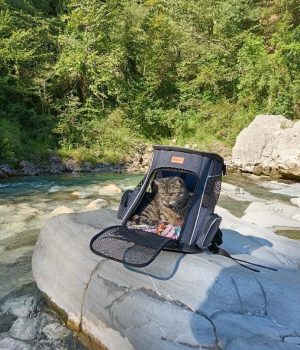
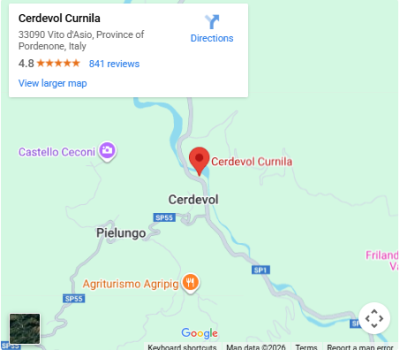
Inland, the landscape shifts dramatically toward alpine foothills and hidden natural gems. In places like Vito d’Asio, waterfalls such as Cerdevol Curnila cascade through untouched scenery—destinations that Gigia inspected carefully, from a safe and elevated position.
Cities, Culture, and Café Life
Urban life in Friuli Venezia Giulia carries a refined, almost literary charm.
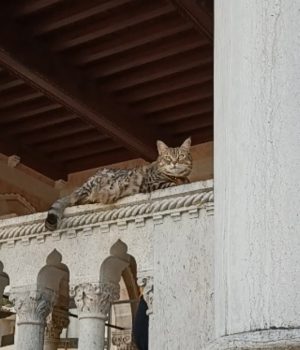
In Udine, Gigia evaluated frescoes and architecture with the seriousness of an art critic. In Pordenone and Sacile, she explored elegant streets and quiet piazzas with practiced ease.
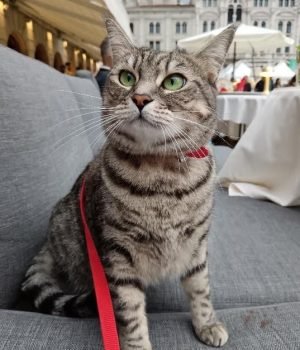
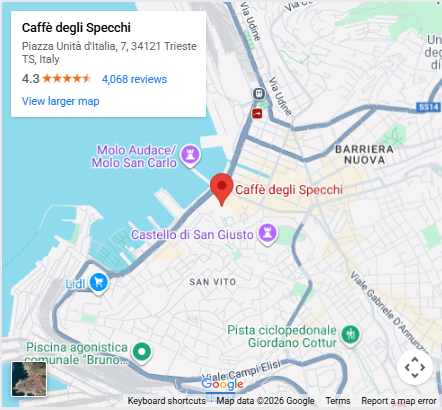
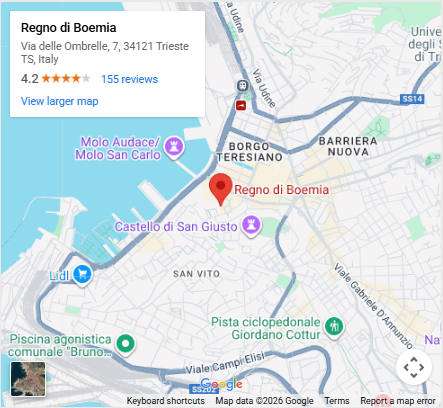
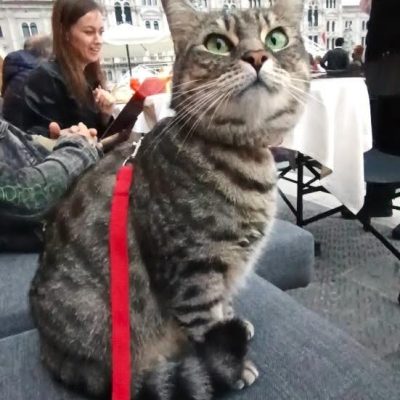
Meanwhile, in Trieste, she took command of the historic Caffè degli Specchi, presiding over the terrace with unmistakable authority—clearly expecting a throne, and arguably deserving one.
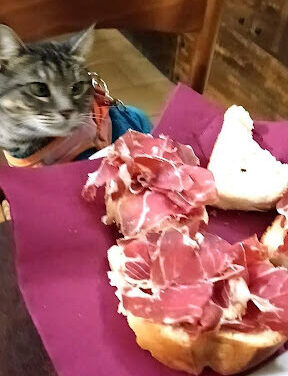
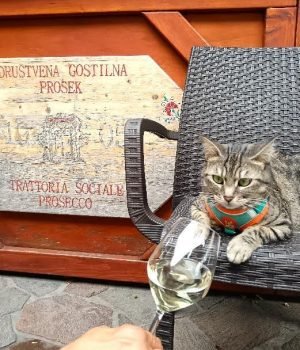
From San Daniele del Friuli, home of world-famous prosciutto, to regional wines and local specialties, this is a destination where food plays a central role. Gigia, naturally, maintained her position as official inspector.
Events, Traditions, and Local Life
Friuli Venezia Giulia is also home to unique cultural traditions and events.
In Trieste, the renowned Barcolana Regatta transforms the sea into a spectacular display of sails and celebration. Gigia observed with calm composure—unmoved by the chaos, yet fully aware of its importance.
Across the region, traditions remain deeply rooted, and daily life unfolds with an authenticity that is increasingly rare.
Explore the Towns of Friuli Venezia Giulia
The destinations below represent some of the most beautiful and characterful places in this culturally rich corner of Italy. For detailed Gigia-approved locations—including her favorite cafés, viewpoints, and hidden corners—check out each of the accordion sections below.
- Aquileia (UD)
- Cordovado (PN)
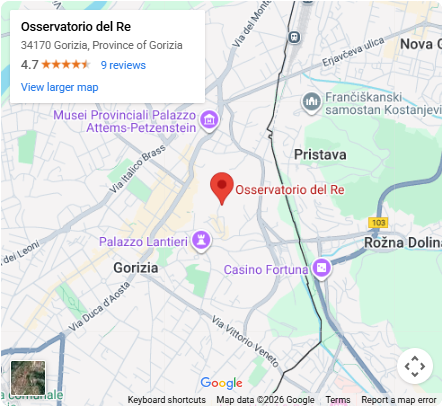
- Gorizia (GO)
- Grado (GO)
- Palmanova (UD)
- Pordenone (PN)
- Sacile (PN)
- San Daniele del Friuli (UD)
- Sesto al Reghena (PN)
- Trieste (TS)
- Udine (UD)
- Vito d’Asio (PN)
Each destination offers its own unique character, forming a region rich in history, culture, and discovery.
Why Visit Friuli Venezia Giulia?
Friuli Venezia Giulia remains one of Italy’s best-kept secrets.
It offers fewer crowds than Italy’s major destinations, yet delivers an equally rich experience—if not more so. This is authentic Italy at its most compelling: layered, diverse, and deeply rewarding for those who take the time to explore more of Italy.
For Gigia, it was simple:
A region of endless sunbeams, historic stones, and new territories to quietly claim—one elegant step at a time.
Planning Your Friuli Venezia Giulia Adventure
For more inspiration and practical advice, explore these resources:
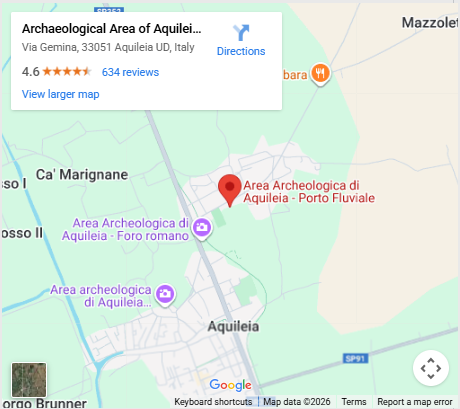
Aquileia (UD)
🏛️ Aquileia: Roman Ruins, UNESCO Heritage & a Cat’s Imperial Perspective
Once one of the most important cities of the Roman Empire, Aquileia is now a UNESCO-listed treasure where ancient history quietly unfolds among open ruins and early Christian landmarks. For travelers exploring northern Italy with a cat, Aquileia offers something rare: space, history, and a slower pace far removed from crowded tourist centers.
🏺 A Former Roman Powerhouse
Founded in 181 BC, Aquileia was once a major hub of the Roman world—strategically positioned and immensely wealthy. Today, its legacy lives on through:
- Expansive archaeological remains
- Ancient Roman columns and forums
- The remarkable Basilica of Aquileia, known for its vast mosaic floors (760 square meters – the largest mosaic floor of the Roman West)
For history lovers, it’s one of the most important archaeological sites in Italy—without the overwhelming crowds of places like Pompeii.
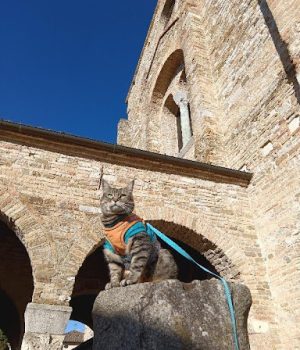
👑 Gigia’s Imperial Takeover
Gigia, naturally, interpreted Aquileia differently.
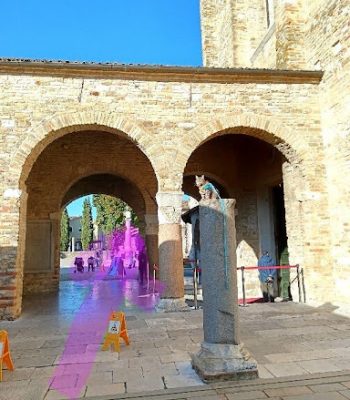
While humans admired mosaics and UNESCO plaques, she focused on what truly mattered: elevation, visibility, and dominance.
- Roman columns became her personal throne
- Tourist attention became expected, not earned
- The entire site? Clearly under new management
Perched above the ancient stones, she delivered a silent but unmistakable message: empires may fall—but feline authority is timeless.
✅ Visiting with a Cat: What to Expect
Aquileia is one of the more manageable cultural sites when traveling with a cat:
Pros:
- Open, spacious layout
- Low crowd density
- Calm, rural surroundings
Limitations:
- Restricted access inside certain monuments (including the basilica)
- Limited shaded areas in peak summer
- Preservation rules strictly enforced
Even so, the outdoor archaeological zones provide plenty of space to explore without compromising the experience.
For broader planning, see traveling Italy with a cat.
For accommodation nearby, explore cat-friendly hotels in Italy or our guide to how to find truly cat-friendly accommodation in Italy.
🏛️ When History Meets Perspective
Denied entry to the basilica interior, Gigia remained entirely unfazed.
Because for her, Aquileia wasn’t about what was inaccessible—it was about what could be claimed:
- A column to conquer
- A viewpoint to dominate
- An audience to impress
And in that sense, Aquileia delivered perfectly.
🌟 Aquileia, Reframed
While many visitors come for its historical significance, Aquileia offers something more subtle:
- A quiet, reflective atmosphere
- Space to experience history without pressure
- A setting where even the smallest moments feel amplified
For Gigia, it was less a lesson in Roman history—and more a reminder that true authority doesn’t need permission.
📚 More Resources for Your Cat-Friendly Italy Trip
Eat & Drink
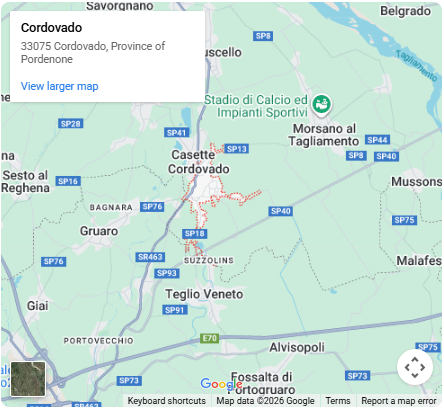
Cordovado (PN)
🏡 Cordovado: One of Italy’s Most Beautiful Villages & a Peaceful Escape in Friuli Venezia Giulia
Recognized among I Borghi più belli d’Italia (Italy’s Most Beautiful Villages), Cordovado is the quiet counterpoint to more dramatic destinations—a place where history, nature, and stillness exist in rare balance.
🏰 A Village Shaped by Centuries
Originally founded as a Roman castrum, Cordovado evolved into a fortified medieval settlement, and its structure still reflects that layered past:
- Defensive walls and surviving towers
- A double ring of canals encircling the historic core
- Elegant green spaces woven into the village layout
The Castello di Cordovado (13th-century fortress) stands within the walled circuit, protected by a large moat. Today, the site includes Villa Freschi Piccolomini, built on the foundations of the ancient keep. The castle is open for visits during “Castelli aperti” (first weekend of April and October).
Walking here feels less like sightseeing and more like stepping into a preserved atmosphere—where time has slowed rather than stopped.
🌿 A Landscape of Quiet Beauty
Cordovado’s charm lies in subtlety:
- Tree-lined paths scented with linden blossoms
- Calm waterways reflecting stone façades
- Gardens and parks that invite pause rather than movement
It’s a place built for wandering slowly—something that, for once, aligned perfectly with Gigia’s post-adventure mood.
⛪ Gigia’s Unexpected Retreat
After more “diplomatically complex” encounters elsewhere, Cordovado became Gigia’s personal sanctuary.
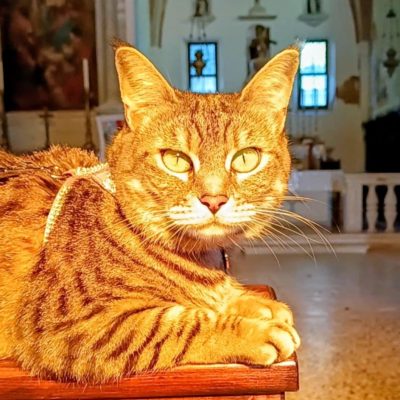
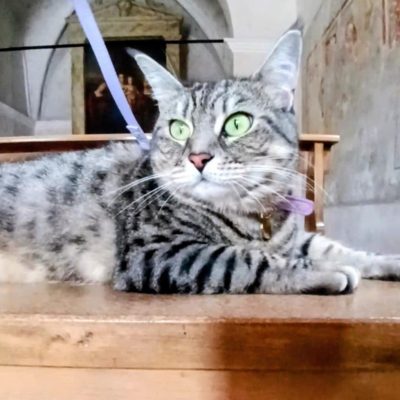
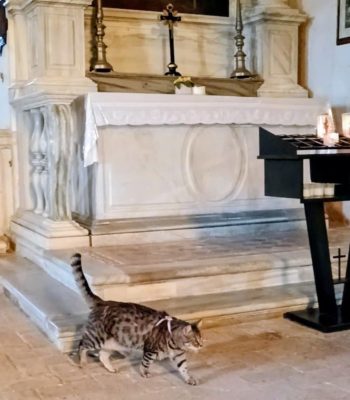
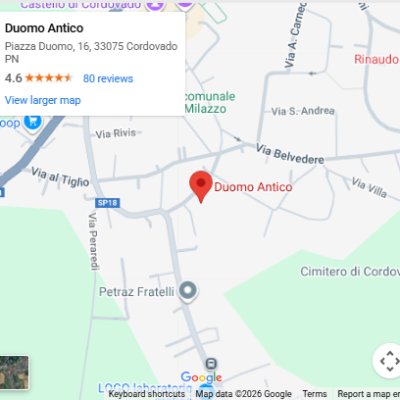
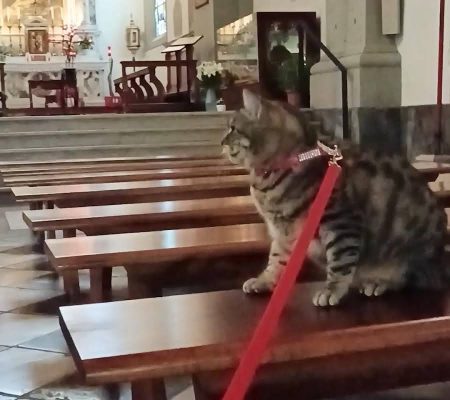
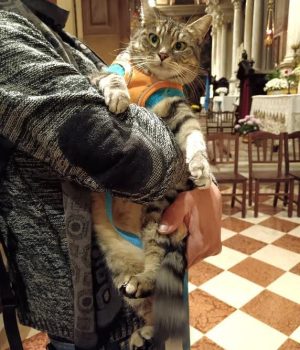
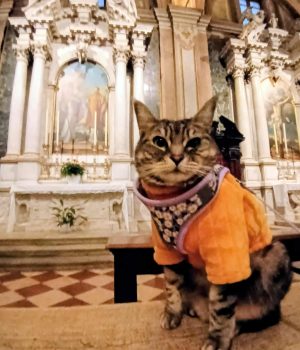
Her destination: the historic Duomo di Sant’Andrea Apostolo (Old Cathedral). Built after the devastating plague of 1454, the church features a portal inscription dated 1477, frescoes including SS. Trinità and San Martino a cavallo, and a separate 20-metre campanile first mentioned in a papal bull of 1186.
Inside, filtered afternoon light created a quiet, almost meditative atmosphere. And in a rare shift from her usual imperial energy, Gigia adapted:
- Settling calmly on a wooden bench
- Observing rather than conquering
- Embracing stillness over spectacle
Not a performance—something closer to contemplation.
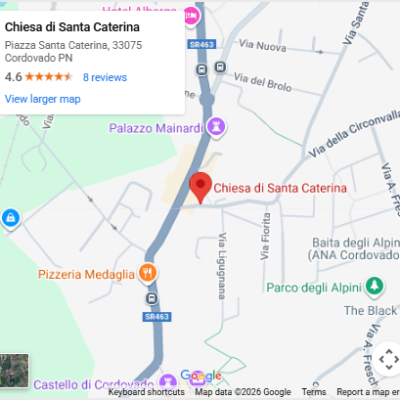
Nearby, the Santuario della Madonna delle Grazie (17th-century octagonal Baroque sanctuary) is the oldest Marian sanctuary in the diocese, featuring stuccoes, bas-reliefs, statues, and frescoes by Antonio Carneo, Baldassar d’Anna, and Giuseppe Moretto.
✨ A Different Kind of Travel Moment
Cordovado doesn’t demand attention. It rewards presence.
And that changes the experience:
- You move slower
- You notice more
- You allow moments to unfold naturally
Even Gigia—normally a force of personality—chose restraint over dominance.
(Though, naturally, not entirely.)
🐾 The Quiet Victory
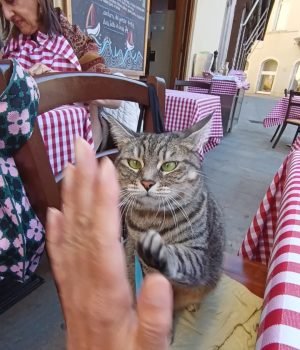
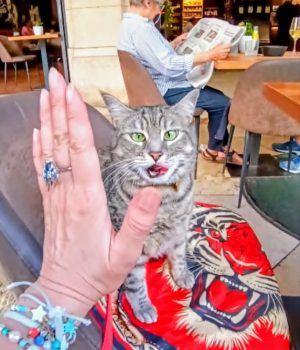
At the end of the visit, her approval came in the simplest form: a deliberate paw “high-five.”
No drama. No conquest.
Just a silent acknowledgment: another remarkable village added to her growing collection—this time without territorial disputes.
Even the local birds seemed to accept the outcome without objection.
✅ Why Visit Cordovado
Cordovado is ideal for travelers seeking:
- Authentic, uncrowded Italian villages
- A slower, reflective travel experience
- A balance of history, greenery, and livability
For those traveling with pets, its calm environment makes it especially manageable compared to busier destinations.
For broader planning, see traveling Italy with a cat.
For accommodation strategy, explore cat-friendly hotels in Italy or our guide to how to find truly cat-friendly accommodation in Italy.
🌟 Cordovado, Reframed
Not every destination needs to impress loudly.
Some—like Cordovado—offer something more lasting:
- Quiet beauty
- Emotional reset
- Space to simply exist
And for one well-traveled cat, it proved that even the most self-assured explorer occasionally chooses peace over power.
📚 More Resources for Your Cat-Friendly Italy Trip
Eat & Drink
Explore
Gorizia (GO)
🍇 Gorizia & Collio: Italy’s Borderland of Cultures, Wine & One Unforgettable Sunset
At the crossroads of Latin, Slavic, and Central European worlds lies Gorizia—a city where borders blur, languages overlap, and history is not just remembered, but lived. Positioned along the Italian-Slovenian frontier, Gorizia offers one of the most culturally layered travel experiences in northern Italy.
🌍 A City of Two Worlds
Gorizia has long stood at the meeting point of empires:
- The Austro-Hungarian Empire
- The Republic of Venice
- The geopolitical divide of the Iron Curtain
Today, that complexity remains visible:
- Bilingual street signs (Italian and Slovenian)
- A cuisine blending Mediterranean and Mitteleuropean influences – including jota, a hearty bean and sauerkraut stew typical of Gorizia, Trieste, and the Istrian peninsula
- A cultural identity shaped by centuries of transition
Even the local dish jota tells the story of this intersection.
🏰 The View from Castello di Gorizia
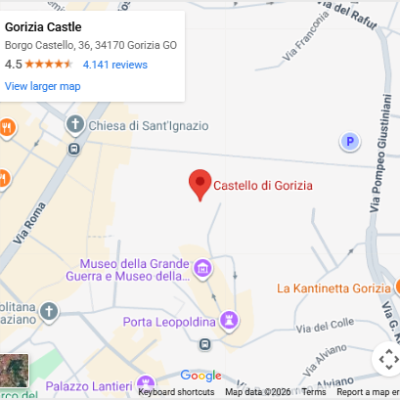
Rising above the city, the Castello di Gorizia (11th-century) offers sweeping views across rooftops, vineyards, and borders that feel increasingly symbolic rather than real. The pentagonal fortress houses the Museum of the Middle Ages and provides spectacular panoramic views over the city and cross-border area.
This is where Gigia made her claim.
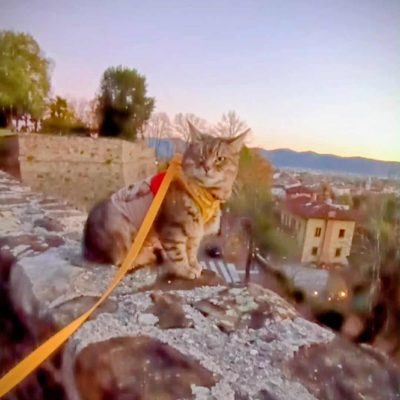
Perched on sun-warmed stone, she surveyed:
- The old town fading into modern grids
- The Collio hills rolling toward Slovenia
- Vineyards producing renowned wines
As the sky shifted from blue to amber, the entire landscape seemed to align with her presence—not as a visitor, but as a quiet ruler of the scene.
🍷 The Collio Wine Region
Stretching between Gorizia and the Slovenian border, the Collio wine region is one of Italy’s most respected white wine territories. This single source covers the region’s renowned varieties including Ribolla Gialla (crisp, citrus, stone fruit) and Friulano (full-bodied, apple, pear, almond).
Defined by its unique ponca soil (a mix of marl and sandstone), the region produces wines with a distinctive mineral and saline profile.
For travelers, the Collio offers:
- Rolling vineyard landscapes
- Boutique wineries
- A slower, more refined pace compared to mainstream wine regions
For an immersive experience, the Oslavia Orange Benches route (5.6 km trail) features 7 benches with QR codes telling the story of the territory’s orange macerated wines.
🏛️ Gradisca d’Isonzo: A Forgotten Fortress
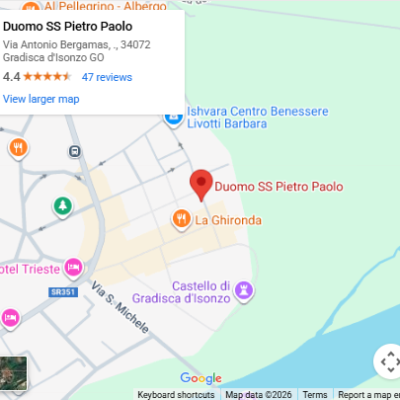
Just southwest lies Gradisca d’Isonzo, a star-shaped fortress town with Venetian and Habsburg roots. Built in the late 15th century to defend the Venetian Republic, its pentagonal shape features two gates and a round tower on each corner, encircled by a deep moat. The fortress was the center of the “Gradiscan war” (1615-1617) between Austria and Venice.
Wide, elegant streets, defensive walls, and a peaceful atmosphere—especially during midday quiet—make it a rewarding stop.
While the castle itself may be closed at times, the surrounding architecture and layout still tell the story of its strategic past.
✅ Traveling with a Cat in Gorizia
This region is surprisingly well-suited for slower, pet-friendly travel:
Pros:
- Low tourist density
- Open viewpoints and walkable areas
- Calm countryside nearby
Considerations:
- Summer heat on exposed stone surfaces
- Limited access inside historic buildings
- Border proximity (keep documentation if moving between Italy and Slovenia)
For broader planning, see traveling Italy with a cat.
For accommodation strategy, explore cat-friendly hotels in Italy or our guide to how to find truly cat-friendly accommodation in Italy.
🌅 A Landscape Beyond Borders
As evening settled over Gorizia, the region revealed its true nature.
Borders softened.
Histories blended.
The landscape became something shared rather than divided.
And for one perfect moment, the province of many identities belonged entirely to a single, self-appointed sovereign.
🐾 Gigia’s Verdict
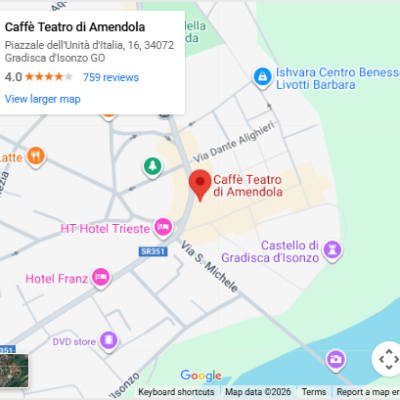
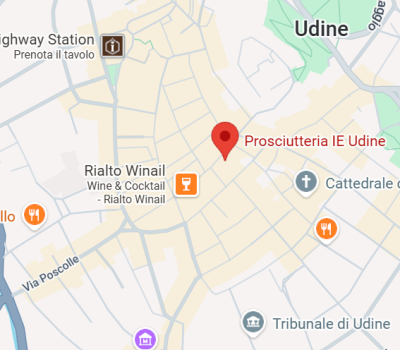
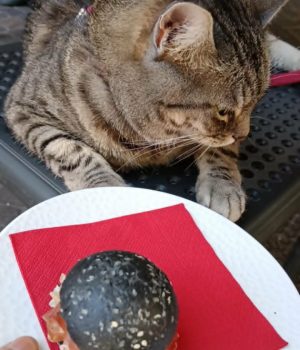
The San Daniele ham was also acceptable.”
For more Friuli Venezia Giulia travel guide and northern Italy wine regions, explore our regional page.
📚 More Resources for Your Cat-Friendly Italy Trip
Grado (GO)
🏖️ Grado: Sun Island, Mosaics & A Cat Who Demands Tribute
They call it the “Sun Island,” but Gigia knows the truth: Grado is actually a giant, floating cat bed with excellent lighting. Between golden beaches made for lesser creatures (sand? In her paws?) and a postcard-perfect old town, this Adriatic gem is famous for boreto alla graisana—a fish stew Gigia fully intended to judge until she discovered something far more fascinating: churches that double as art galleries and napping sanctuaries.
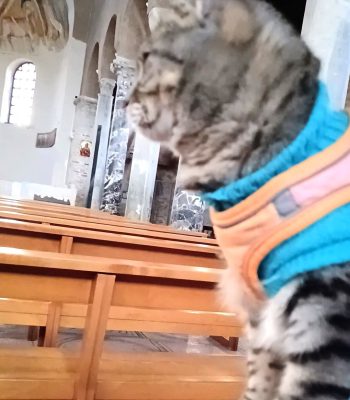
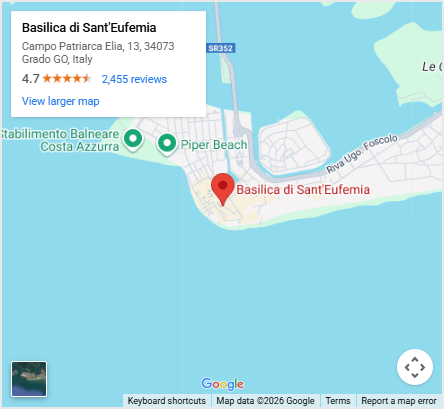
⛪ Basilica of Sant’Eufemia & Santa Maria delle Grazie
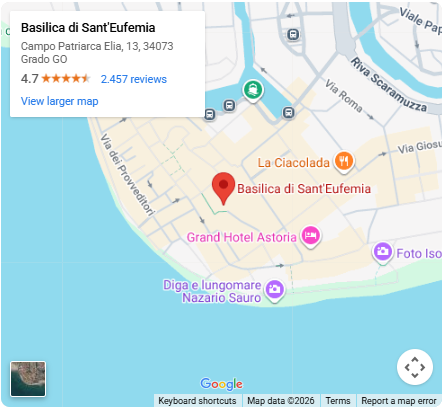
The Basilica of Sant’Eufemia‘s mosaics held her attention for a full seven minutes (a record outside of mealtime). Built in 579 AD, the basilica features stunning mosaic floors with Latin inscriptions and geometric patterns, including a notable mosaic with the monogram of Bishop Elia.
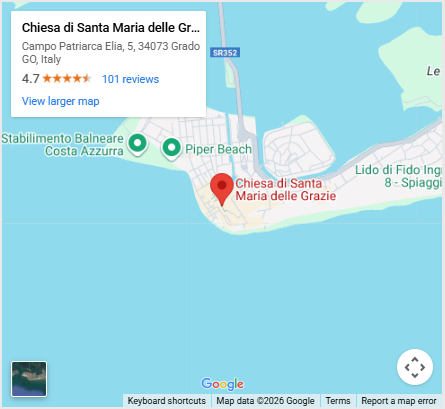
The official Basilica of Santa Maria delle Grazie is one of the oldest Christian worship buildings along the North Adriatic. Inside, you’ll find a surprising one-metre drop between floor levels, mosaic flooring with geometric patterns and large four-petal flowers, and inscriptions of benefactors’ names. The five columns with beautiful reclaimed capitals date back to the period of Patriarch Elias.
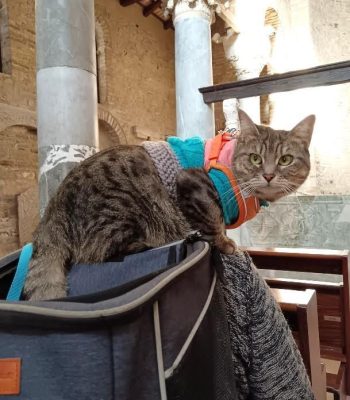
Santa Maria delle Grazie’s serenity was “acceptable, though lacking throw pillows.” As sunlight filtered through ancient windows, she assumed the pose of a feline mystic receiving visions—or possibly just calculating how to steal a saint’s gilded halo.
👑 Waterfront Promenade: A Royal Inspection
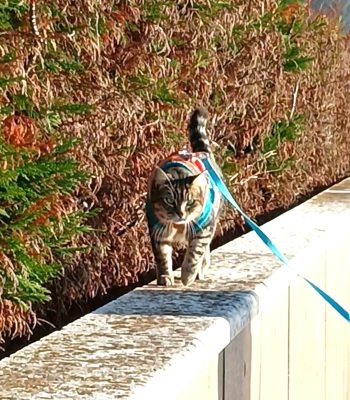
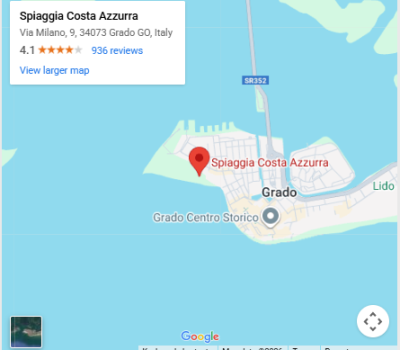
Her waterfront promenade was less “stroll” and more “royal inspection of peasant beach activities.” The Adriatic sparkled obligingly as she declined to step on sand (“Beneath my dignity”), opting instead to admire the view from a pristine bench—the perfect vantage point to ignore seagulls and contemplate lunch.
During winter months, some businesses on the island take a break, but many remain open to welcome visitors. The official tourism site provides an updated list of restaurants and services open during winter in Grado, which is helpful for planning.
🍽️ The Tragic Twist: Winter Sundays
Ah, lunch. The tragic twist in our tale: winter Sundays in Grado mean every restaurant is fuller than a cat’s ego. As humans sighed at closed doors, Gigia demonstrated profound wisdom: “Why weep for fish stew when you can demand tribute elsewhere?” (Her method: sitting directly on guidebooks until snacks appeared.)
✅ Traveling with a Cat in Grado
Grado is one of the more pet-friendly destinations on the Adriatic coast:
Pros:
- Pet-friendly hotels available throughout the island
- Flat, walkable historic center
- Calm atmosphere in winter months
Considerations:
- Winter Sundays have limited restaurant hours – plan ahead
- Summer brings larger crowds
- Sand beaches may not appeal to all cats
For broader planning, see traveling Italy with a cat.
For accommodation strategy, explore cat-friendly hotels in Italy or our guide to how to find truly cat-friendly accommodation in Italy.
🏨 Verified Pet-Friendly Hotels in Grado
Several hotels in Grado welcome pets. Here are verified options to consider for your stay:
✅ Cats accepted in accommodation and common areas. One of the few hotels in Grado that explicitly welcomes feline guests.
✅ Pets allowed (charges may apply). Located near the beach with a designated pet-friendly beach area.
✅ Cats may be allowed by request. Family-run bed & breakfast, 5-minute walk from beach and city center.
✅ Pets allowed on request. Pet-friendly rooms available.
✅ Pet-friendly (confirm directly). Features a rooftop terrace and garden.
✅ Pet-friendly (confirm directly). Located near the beach.
✅ Pets allowed on request (charges may apply). Located near the tourist harbour, 2-minute walk to historic center.
⚠️ Note: Pet policies may vary based on room type or availability. Always confirm directly with the hotel before booking. For hotels without websites, we recommend calling ahead to verify their current pet policy.
🌟 Grado, Reframed
In the end, Grado proved the perfect destination—not for its famed seafood, but for teaching us that true enlightenment comes from chasing sunbeams in sacred spaces… and loudly reminding everyone who’s really in charge of the itinerary.
For more Friuli Venezia Giulia travel guide, explore our regional page.
📚 More Resources for Your Cat-Friendly Italy Trip
Palmanova (UD)
🏰 Palmanova: Star Fortress, Perfect Symmetry & A Cat Who Conquered It All
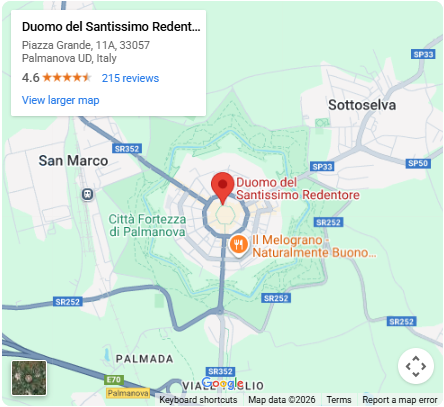
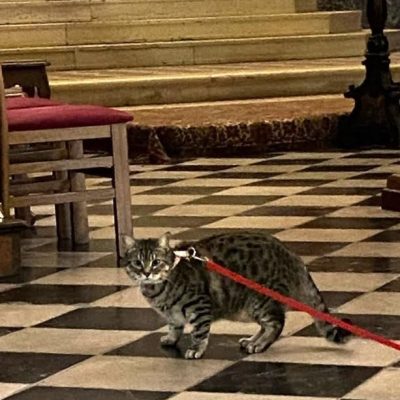
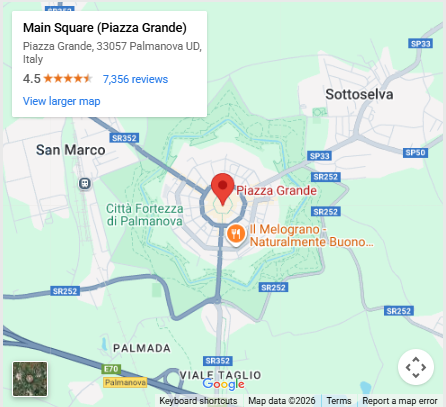
They called it an “impenetrable Renaissance fortress,” but Gigia knew better—this nine-pointed star fortress was clearly designed as her personal throne room. Built in 1593 by the Venetian Republic, this unique star-shaped city with three concentric walls is now a National Monument and a UNESCO World Heritage Site. As the only creature allowed to break Palmanova’s perfect symmetry (by sitting dramatically off-centre in the Piazza Grande), she conducted her royal inspection with typical feline disregard for military history.
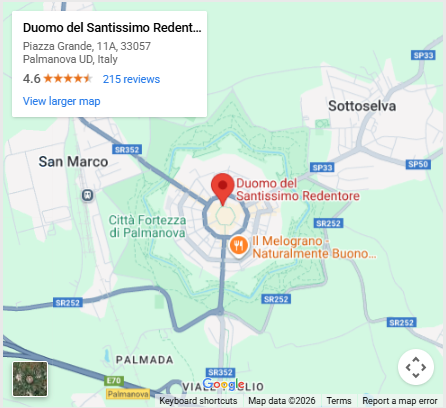
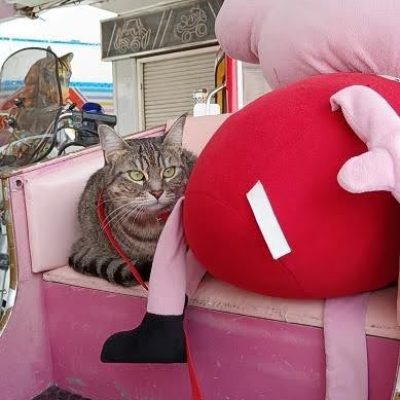
The Cathedral of Palmanova (Duomo) erupted in applause upon her arrival—as well it should when hosting a living masterpiece. This 17th-century cathedral features a Baroque interior and the “Pala delle Milizie” altarpiece by Alessandro Varotari (Il Padovanino) from 1641. (The bishop may have called it “a choir rehearsal,” but we know the truth.) Meanwhile, the Military History Museum (housed above Porta Cividale) offered a pretend carriage ride—a concept Gigia found both baffling (“Why pretend when I deserve the real thing?”) and strangely satisfying, especially when adoring subjects lined up to photograph her regal perch.
As she processed down radial streets designed to confuse invaders, Gigia demonstrated their true purpose: showcasing her profile from nine mathematically perfect angles. The star-shaped walls? Merely a frame for her star-quality presence. The strategic defences? Useless against her most potent weapon—the “I live here now” stare directed at gelato in Palmanova vendors, especially the beloved Nonna Pallina gelateria, known for its creamy gelato and unique Palmanova-shaped cakes.
By sunset, Palmanova’s UNESCO status had quietly updated to include “Home of the Fluffiest Conqueror.” As for Gigia? She left pondering life’s great questions: If a fortress falls to a cat’s charm, does it make a sound? And where’s my golden carriage?
✅ Traveling with a Cat in Palmanova
Palmanova is surprisingly well-suited for a relaxed visit with a cat:
Pros:
- Flat, walkable historic center
- Spacious piazza with outdoor cafés
- Unique star-shaped layout perfect for leashed exploration
Considerations:
- Summer heat on exposed stone surfaces
- Limited shade in the main piazza
- Walled city means limited green spaces
For broader planning, see traveling Italy with a cat.
For accommodation strategy, explore cat-friendly hotels in Italy or our guide to how to find truly cat-friendly accommodation in Italy. For pet-friendly options specifically in Palmanova, check pet-friendly hotels in Palmanova on major booking platforms.
For more Friuli Venezia Giulia travel guide, explore our regional page.
📚 More Resources for Your Cat-Friendly Italy Trip
Pordenone (PN)
🏔️ Pordenone & Tramonti di Sopra: Venetian Elegance Meets Wild Mountain Pools
This elegant town, with its Venetian arcades and prestigious Dedica Film Festival, won Gigia’s heart—though her most enthusiastic purrs were reserved for the red carpet (a star is born, indeed). Yet beyond the cultured piazzas, Pordenone reveals its wilder soul to those in the know.
🏛️ Pordenone: Arcades, Art & Festival Lights
Pordenone’s historic center is defined by its elegant arcaded streets and Venetian-inspired architecture. According to the Pordenone travel guide, the city boasts the Corso Vittorio Emanuele II (an elegant arcaded street with pastel-colored Venetian-style palaces), the 13th-century Gothic Duomo di Pordenone featuring Il Pordenone frescoes by Renaissance master Giovanni Antonio de Sacchis, the peaceful Noncello River for riverside walks, and the Gothic-Venetian Palazzo Comunale (Town Hall).
🏞️ Tramonti di Sopra & The Emerald Pools
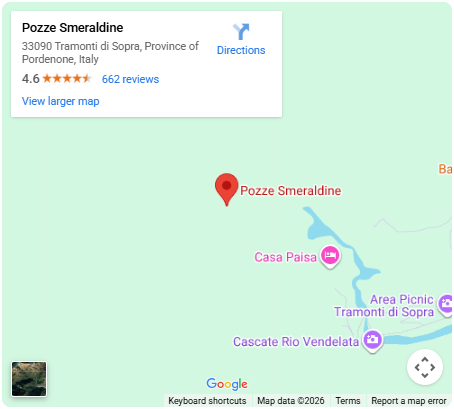
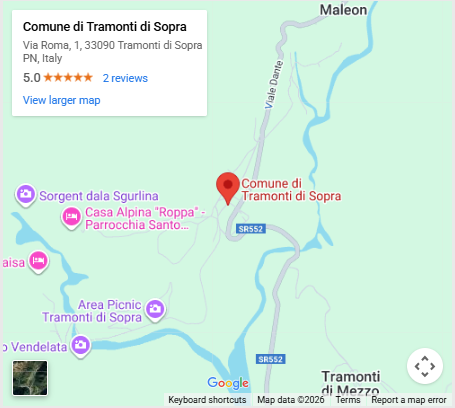
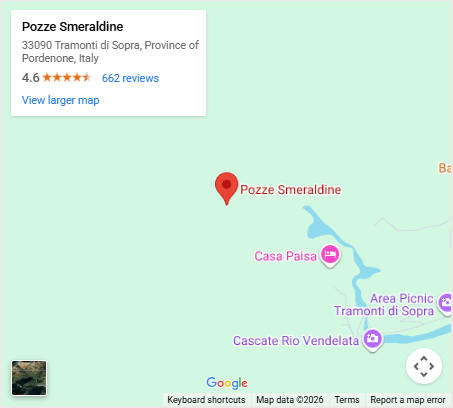
Connoisseurs of natural beauty understand that past the city’s confines lie hidden gems. The charming gateway to this paradise? Tramonti di Sopra, a small mountain village (268 inhabitants, 420m elevation) within the Parco naturale delle Dolomiti Friulane – the Friulian Dolomites.
Here, the Pozze Smeraldine (Emerald Pools) are nature’s own infinity pools, formed by the Meduna River as it cascades through natural gravel barriers. A 6.8 km hiking trail from Sottrivea picnic area leads to these crystalline emerald pools, perfect for a refreshing dip on a hot summer day.
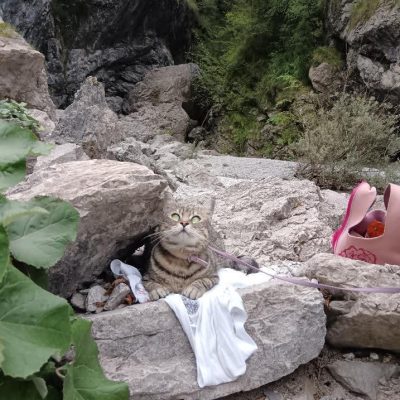
Here, when summer temperatures soared to a sweltering 38°C, Gigia discovered the perfect retreat. The Prealpi’s jagged limestone sentinels stood guard over valleys offering cool respite, while those secret swimming holes became her personal oasis. She approached the terrain with the boldness of a seasoned explorer and the focus of… well, a cat who’s spotted a butterfly.
Hay bales became personal Everests, mountain streams turned into her private tasting menu, and sun-warmed rocks served as five-star lounging spots – as if she’d invented relaxation itself.
🍽️ Truffles, Prosciutto & Countryside Osterias
As truffle-scented breezes danced along trails winding toward the Dolomites, Pordenone revealed its magic: adventure becomes irresistible when paired with the possibility of “stray” prosciutto in Pordenone at a countryside osteria. Prosciutteria Ristorante Paradiso is a hidden gem known for its excellent prosciutto, carbonara, and steak – arrive at 12 noon to avoid crowds.
✅ Traveling with a Cat in Pordenone & Tramonti di Sopra
This region offers a unique blend of urban elegance and wild nature for cat-friendly travel:
Pros:
- Walkable historic center with shaded arcades (Pordenone)
- Cool mountain retreats (Tramonti di Sopra)
- Access to natural swimming holes (Pozze Smeraldine)
- Less crowded than more famous Italian destinations
Considerations:
- Summer heat in the city (seek mountain refuge)
- Mountain trails require secure harness and carrier
- Limited pet-friendly dining options in remote areas
For broader planning, see traveling Italy with a cat.
For accommodation strategy, explore cat-friendly hotels in Italy or our guide to how to find truly cat-friendly accommodation in Italy.
For more Friuli Venezia Giulia travel guide, explore our regional page.
📚 More Resources for Your Cat-Friendly Italy Trip
Explore
Sacile (PN)
🌸 Sacile: The Garden of the Serenissima & A Cat Who Demanded Better Seating
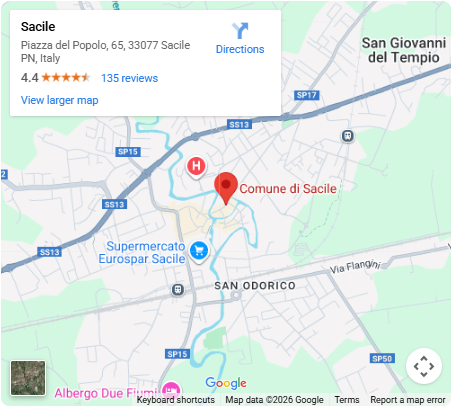
Known as the “Garden of the Serenissima”, Sacile is a graceful town where Venetian elegance meets the gentle flow of the Livenza River. Often called “Little Venice” of Friuli-Venezia Giulia, this charming municipality is built on two islands in the river, with noble palaces reflecting in the water like a quieter, more intimate version of its famous lagoon cousin.
🏛️ The Heart of Sacile: Piazza del Popolo & Palazzo Comunale
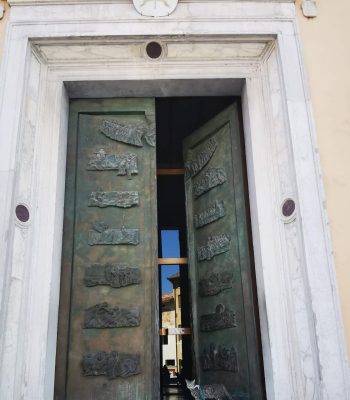
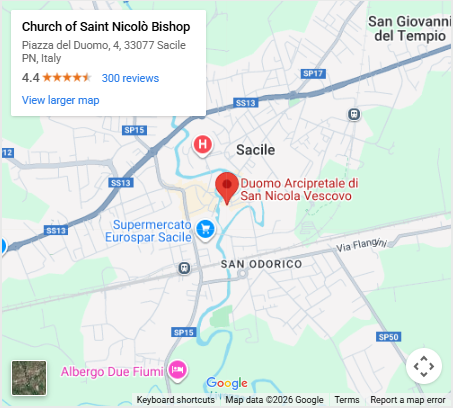
The heart of Sacile is Piazza del Popolo, an elegant square lined with arcades and dominated by the Palazzo Comunale—a striking 15th-century building that once served as a theatre before becoming the town hall in 1930. Under its loggia, busts of Italy’s founding fathers keep silent watch. Nearby, the Cathedral of San Nicolò stands proudly, its interior adorned with marble altars and frescoes.
And then there is Palazzo Ragazzoni, a 16th-century noble residence with magnificently frescoed interiors depicting historical and mythological scenes.
🚣 Canals, River Tours & The Campanile
The river tour, offered by IAT Sacile, allows visitors to glide under ancient stone bridges and past the 16th-century facades of warehouse palaces. Gigia observed from the dock, thoroughly unimpressed by the life jackets (“They clash with my fur”).
For those seeking a higher perspective, the Campanile offers panoramic views across the Livenza Valley—though Gigia considered the climb “excessive” and dispatched her humans to report back on the vista. Their description of the Friulian plain stretching toward the Dolomites was met with a single approving blink.
🍷 Beyond Sacile: Wine Bars & Countryside Retreats
For travelers looking to explore the wider region, our guide to cat-friendly wine bars in Italy offers tips on sipping local Friulian whites like Ribolla Gialla and Friulano with your feline companion. And for those seeking a countryside escape, our budget-friendly pet-friendly farm stays in Italy guide covers affordable agriturismo options across the region.
✅ Traveling with a Cat in Sacile
Sacile is well-suited for a relaxed visit with a cat:
Pros:
- Flat, walkable historic center with shaded arcades
- Peaceful riverfront promenades
- Less crowded than more famous Venetian towns
Considerations:
- Summer heat on exposed piazzas
- Limited green spaces within the historic center
- River access requires secure harness supervision
For broader planning, see traveling Italy with a cat.
For accommodation strategy, explore cat-friendly hotels in Italy or our guide to how to find truly cat-friendly accommodation in Italy.
For more Friuli Venezia Giulia travel guide, explore our regional page.
📚 More Resources for Your Cat-Friendly Italy Trip
Explore
San Daniele del Fruili (UD)
🍖 San Daniele del Friuli: Prosciutto, Frescoes & A Cat Who Judged Both
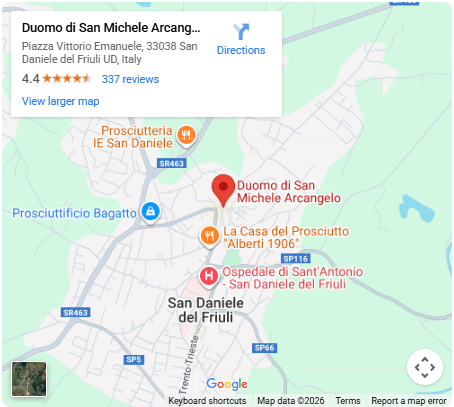
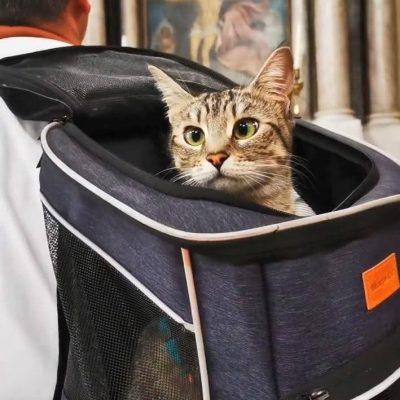
The crown jewel of Friuli’s hill towns is famous for its Prosciutto di San Daniele DOP, but Gigia discovered its real treasure: a cathedral that doubles as the world’s most elegant sunbeam collector. As golden light filtered through San Michele Arcangelo Cathedral’s windows, she conducted her sacred duty—testing every patch of warmth with scientific precision. (“This spot? 8/10. That one by the altar? Divine.”)
The frescoed ceilings of the Chiesa di Sant’Antonio Abate, often called the “Sistine Chapel of Friuli” for its magnificent Renaissance frescoes by Pellegrino da San Daniele, earned her rare feline approval. (“Finally,” her expression seemed to say, “art worthy of my gaze.”) Though whether she admired the brushwork or simply calculated how to reach those tempting ledges remains a theological debate.
Meanwhile, the town’s sleepy piazzas became her personal runway—each café table inspected, each prosciutto-scented breeze thoroughly analyzed.
San Daniele’s magic lies in its contradictions: ancient artistry meets slow-living joy, human gastronomy meets feline gravity studies (“If I knock this breadbasket over, how fast will they bring prosciutto to appease me?”). By sunset, even the cathedral cats (yes, they exist) nodded respect as she claimed the prime sunset-viewing step on the Castle Park belvedere—proving that while ham may draw visitors, it’s the play of light on ancient stones that truly feeds the soul.
✅ Traveling with a Cat in San Daniele del Friuli
San Daniele is one of the more cat-friendly hill towns in Friuli:
Pros:
- Compact, walkable historic center
- Peaceful piazzas with outdoor cafés
- Beautiful hilltop views and fresh mountain air
- Several pet-friendly accommodations including Relais Picaron
Considerations:
- Steep streets in the historic center
- Limited green spaces within the town walls
- Prosciutto-scented air may create unrealistic snack expectations
For broader planning, see traveling Italy with a cat.
For accommodation strategy, explore cat-friendly hotels in Italy or our guide to how to find truly cat-friendly accommodation in Italy.
For more Friuli Venezia Giulia travel guide, explore our regional page.
📚 More Resources for Your Cat-Friendly Italy Trip
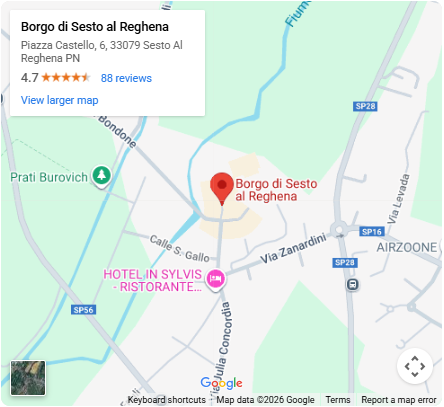
Sesto al Reghena (PN)
🏰 Sesto al Reghena: Ancient Abbey, Feline Drama & A Filetto That Was Not Enough
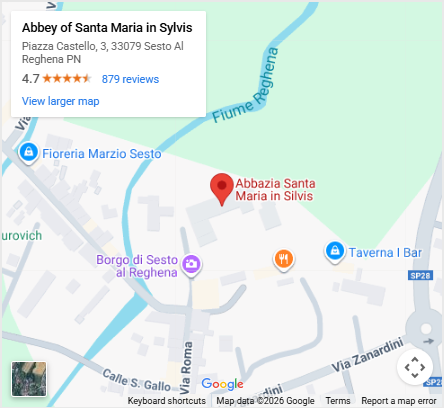
In the mysterious Friulian plains, where morning air smells intensely of ancient history and ancestral feline suspicion, rises Sesto al Reghena, one of Italy’s most authentic villages with uninterrupted traditions. Its beating heart is the magnificent Abbey of Santa Maria in Sylvis, a fortified monastic complex with a defensive moat and imposing walls that have silently witnessed everything from ferocious Hungarian raiders to contemporary Japanese tourists armed with selfie sticks.
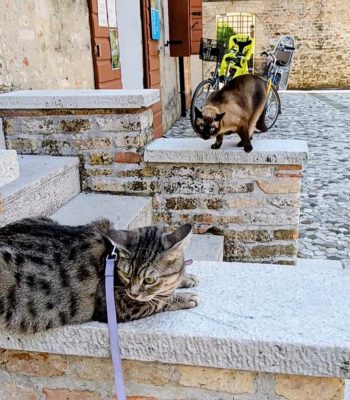
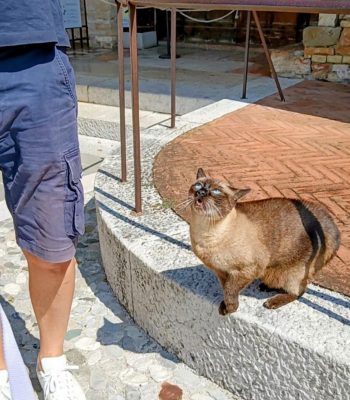
👑 The Encounter: A Siamese Godfather
Our unforgettable adventure began with a fatal encounter: an imposing, handsome Siamese, radiating the menacing air of an undisputed neighborhood “godfather.” With the refined cunning of a secret agent, we bribed him with gourmet snacks, strategically purchasing his temporary indifference. Seizing the diplomatic truce, we cautiously led Gigia into the abbey’s enchanted green garden. Naturally, she immediately declared that perfectly manicured lawn her personal domain, methodically examining every blade of grass with the concentration of a royal gardener.
🎭 The Opera: A Territorial Aria
The drama exploded upon our return to the historic square. The Siamese, having finished his diplomatic snack, finally laid his piercing, judgmental eyes on innocent Gigia. It wasn’t a simple territorial meow—it was operatic drama, a sharp cry of betrayal and mortal offense.
Gigia, serenity itself in feline form, stoically endured the feline hysteria with her usual regal composure, like a refined duchess momentarily bothered by a particularly annoying bumblebee.
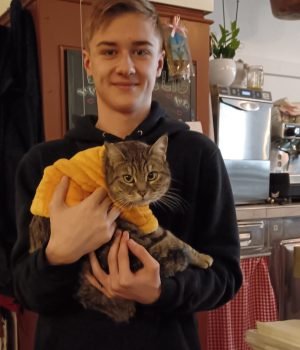
However, to wisely avoid flying claws, we opted for a strategic retreat. My faithful friend gently lifted Gigia onto his protective shoulder, magically transforming her into an imperial height safe from terrestrial threats. But the territorial Siamese boss was not the type to surrender so easily. He followed us implacably across the cobbled square, melodically intoning his Greek tragedy until, in an explosive culmination of uncontrollable fury, he courageously launched a direct assault on my poor friend’s legs.
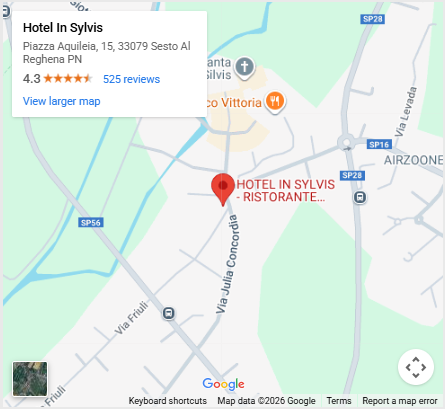
🍽️ The Refuge: Hotel Ristorante in Sylvis
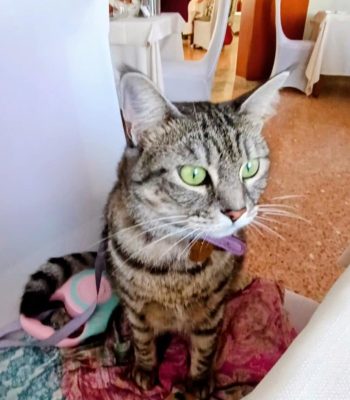
Our saving refuge? The enchanting Hotel Ristorante in Sylvis, a magical place that smells of ancient wood and mysterious stories. And here, in this gastronomic temple, Gigia made her triumphant entrance.
While we common humans modestly settled for the traditional menu, Gigia was generously offered an entire raw beef fillet, free and spontaneously, should she only have the slightest culinary desire. She, with the aristocratic disinterest of an international supermodel on a strict diet, royally deigned to grace the precious offering with a vague, distant glance—preferring clearly the immense, devoted attention of all the qualified staff and fascinated guests.
✨ The Lesson of Sesto al Reghena
And so, Sesto al Reghena gave us generously not only a fascinating lesson in living history within the sacred walls of the Abbey (of which, it must be admitted, we could only admire the external frescoes due to temporary closure), but also a memorable practical lesson in feline hierarchy’s complex dynamics.
It taught us wisely that even in the most authentically beautiful Italian villages with inviolable traditions, local law is often inexorably dictated by an authoritative Siamese cat with territorial Napoleonic ambitions. And the only thing more powerful than his feline resentment is the irresistible magnetism of a cat who knows perfectly well that she is a queen by divine right—especially when she elegantly refuses a premium beef fillet offered devoutly.
✅ Traveling with a Cat in Sesto al Reghena
Pros:
- Stunning abbey grounds perfect for leashed exploration
- Peaceful, uncrowded village atmosphere
- Exceptional pet-friendly dining at Hotel Ristorante in Sylvis
Considerations:
- Territorial local cats (bring diplomatic snacks)
- Limited opening hours for abbey interior
- Small village with limited accommodation options
For broader planning, see traveling Italy with a cat.
For accommodation strategy, explore cat-friendly hotels in Italy or our guide to how to find truly cat-friendly accommodation in Italy.
For more Friuli Venezia Giulia travel guide, explore our regional page.
📚 More Resources for Your Cat-Friendly Italy Trip
Eat & Drink
Explore
Trieste (TS)
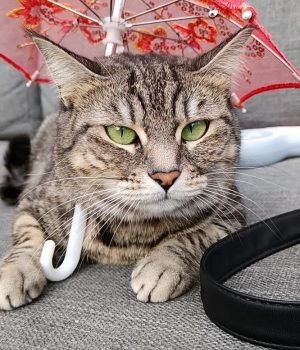
🌊 Trieste: Adriatic Elegance, Coffee Culture & a City Made for Grand Entrances
Known for its imperial past, literary heritage, and sweeping sea views, Trieste is one of Italy’s most distinctive cities—where Central European sophistication meets Mediterranean light. Positioned at the crossroads of empires, Trieste offers a cultural blend unlike anywhere else in the country.
🏛️ A City of Empires & Ideas
Once a major port of the Austro-Hungarian Empire, Trieste still carries its legacy in grand neoclassical architecture, historic cafés frequented by writers and intellectuals, and a refined, cosmopolitan atmosphere. Its literary and cultural identity has long attracted thinkers, making it one of Italy’s most intellectually rich destinations.
👑 Gigia Takes the Stage
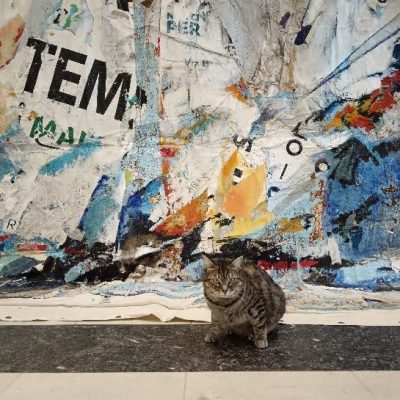
For Gigia, Trieste wasn’t a destination—it was a performance.
Her appearances unfolded across two very different but equally fitting venues:
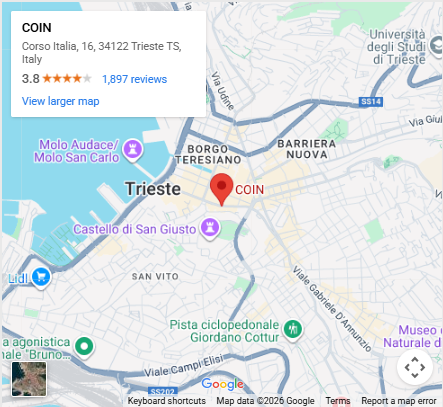
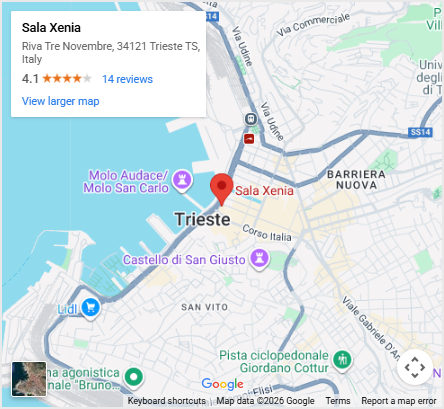
- At Coin Excelsior (Corso Italia 16), she hosted her book Il Dono di Gigia
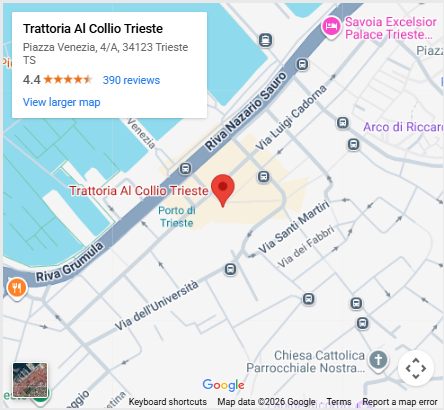
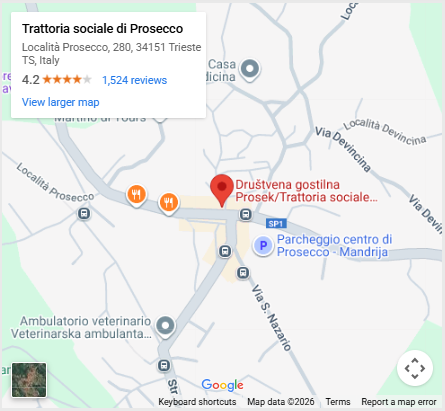
- At Trattoria Al Collio (Piazza Venezia, 4/A), she dined like inherited nobility
Three generations of restaurateurs understood immediately: this was not a guest, but an institution.
🏞️ Piazzas, Sea Views & Signature Moments
Trieste’s landmarks provided the perfect stage set:
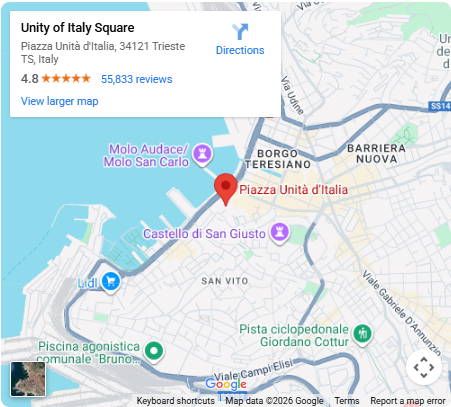
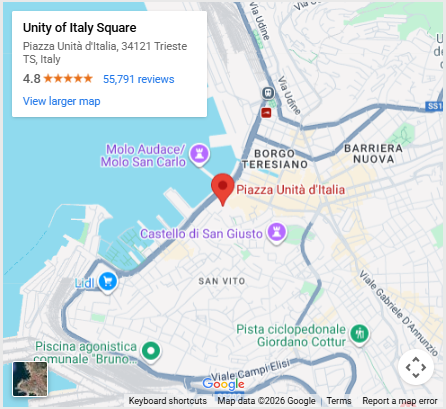
- Piazza Unità d’Italia — one of Europe’s largest sea-facing squares
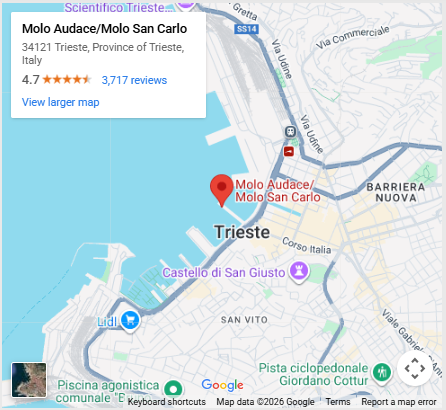
- Molo Audace — a panoramic walkway into the Adriatic, where the Italian destroyer “Audace” docked in 1918
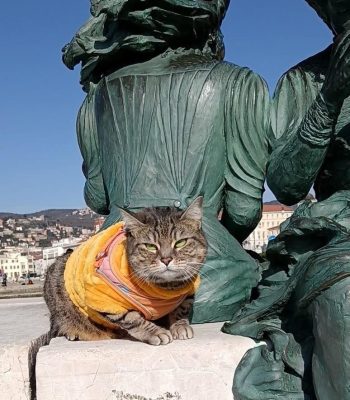
- Fountain of the Four Continents — where marble figures met feline confidence
- Caffè degli Specchi — where admiration became inevitable
Here, Gigia perfected balcony poses overlooking the sea, conducted silent negotiations with local pigeons, and accepted public attention as a natural constant.
⛵ The Barcolana & the Spectacle of the Sea
Each year, Trieste hosts the Barcolana regatta — one of the largest sailing races in the world (2,000+ boats, second Sunday of October).
For most visitors, it’s the highlight.
For Gigia?
A pleasant background detail. (“Two hundred boats? Two thousand? Manageable.”)
☕ Coffee Culture & Culinary Identity
Trieste’s coffee culture is legendary—arguably among the best in Italy. Emperor Charles VI declared Trieste a free port in 1719, enabling coffee imports that led to Viennese-style cafés where James Joyce, Italo Svevo, and Umberto Saba once lingered.
But while humans debated flavors and traditions, Gigia focused on more important matters: table positioning, water service efficiency, and optimal audience visibility.
✅ Traveling with a Cat in Trieste
Trieste is surprisingly adaptable for cat travel—if approached strategically:
Pros:
- Walkable historic center
- Open piazzas and waterfront promenades
- Pet-tolerant café culture
Considerations:
- Wind (the famous Bora) can be strong
- Busy central areas during events
- Limited access inside certain historic buildings
For broader planning, see traveling Italy with a cat.
For accommodation strategy, explore cat-friendly hotels in Italy or our guide to how to find truly cat-friendly accommodation in Italy.
🌟 Trieste, Reimagined
Trieste is often described through its history—its empires, its writers, its geography.
But sometimes, it’s better understood differently:
- As a stage
- As a setting for presence, not just movement
- As a place where elegance is effortless
And for one unforgettable visit, it became exactly what it was meant to be: a city worthy of a queen.
For more Friuli Venezia Giulia travel guide, explore our regional page.
📚 More Resources for Your Cat-Friendly Italy Trip
Udine (UD)
🎨 Udine: Friuli’s Cultural Capital of Art, Wine & Quiet Elegance
Elegant yet understated, Udine is often considered the cultural heart of Friuli Venezia Giulia—a city where Venetian influence, refined cuisine, and artistic heritage converge in a more intimate, less crowded setting than Italy’s major art hubs.
🏛️ A City Shaped by Art & Influence
Udine’s identity is deeply tied to the legacy of Giambattista Tiepolo, whose frescoes define much of the city’s visual character. Across Udine, you’ll find Venetian-style palazzos, Baroque interiors rich in detail, and churches adorned with dramatic fresco cycles.
At the center stands the Duomo di Udine, where gilded altarpieces and layered artwork create one of the region’s most impressive sacred spaces. Inside, Tiepolo frescoes (1726) adorn the Chapel of the Holy Sacrament, including the Sacrifice of Isaac, Dream of Abraham, and illusionistic ceiling angels.
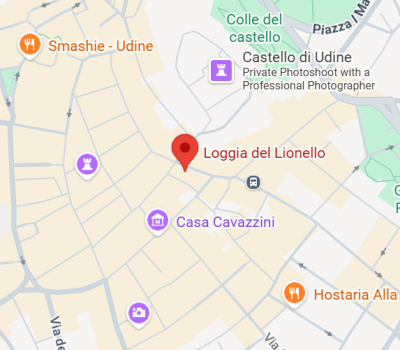
The Castle of Udine rises above the city, offering panoramic views of the surrounding Friulian landscape from its hilltop position. Below, Piazza Libertà is described as “Italy’s most beautiful Venetian-style square on the mainland,” featuring the Loggia del Lionello, Loggia di San Giovanni, and the Clock Tower.
🎄 Festive Atmosphere & Seasonal Charm
During winter, Udine transforms: piazzas fill with Christmas markets in Udine, lights reflect across historic façades, and local specialties circulate in abundance. Piazza Libertà features a towering Christmas tree and light projections on the Loggia del Lionello, while Piazza Matteotti becomes the city’s festive “living room.”
For Gigia, this meant observing crowds with controlled detachment, ignoring regional delicacies in favor of attention, and perfecting the art of passive admiration collection.
🍷 Food & Wine: Friuli’s Quiet Strength
Udine sits at the center of one of Italy’s most respected (yet underrated) culinary regions. According to Trip.com’s Udine guide, visitors can enjoy Friulano wines including Ribolla Gialla and Refosco with Red Stem, as well as traditional Friulian cuisine such as frico croccante, cjarsons, and muset e brovada.
Just outside the city, the hills produce legendary Prosciutto San Daniele at historic producers like La Casa del Prosciutto “Alberti 1906.”
While visitors focus on food, Gigia remained committed to higher priorities: audience engagement, spatial dominance, and maintaining aesthetic superiority.
✅ Traveling with a Cat in Udine
Udine is one of the most manageable cities in northern Italy for cat travel:
Pros:
- Calm atmosphere compared to major cities
- Walkable historic center
- Less congestion and noise
Considerations:
- Limited access inside churches and museums
- Seasonal crowds during holidays
- Cold winters require preparation
For broader planning, see traveling Italy with a cat.
For accommodation strategy, explore cat-friendly hotels in Italy or our guide to how to find truly cat-friendly accommodation in Italy.
🌟 Udine, Reframed
Udine doesn’t compete with Italy’s louder destinations. Instead, it offers depth over spectacle, atmosphere over crowds, and art that reveals itself slowly.
And in that environment, something interesting happens: even a city built on centuries of artistic excellence becomes a backdrop for something new.
For more Friuli Venezia Giulia travel guide, explore our regional page.
📚 More Resources for Your Cat-Friendly Italy Trip
Vito d'Asio (PN)
💚 Vito d’Asio & Cerdevol Curnila: Emerald Waters and a Hidden Nature Escape in Friuli
Tucked deep within the mountains of Vito d’Asio lies one of the region’s best-kept secrets: Cerdevol Curnila. Carved by the pristine Arzino River, this secluded natural oasis is known for its emerald waters, smooth rock formations, and peaceful, uncrowded atmosphere.
🏞️ A Hidden Paradise in Val d’Arzino
Located in the heart of Val d’Arzino, between the small villages of Pielungo and San Francesco, Cerdevol Curnila offers crystal-clear natural pools ideal for swimming, silver-toned boulders shaped by centuries of water flow, and a tranquil, untouched landscape far from mass tourism. The Financial Times named it one of the most beautiful wild beaches in Europe.
The Arzino River stretches 28 km through the valley, creating spectacular emerald pools and waterfalls. It is one of the last Alpine watercourses with a high degree of naturalness, with its source at Mount Teglara.
Nearby attractions include the Grotta delle Aganas (cave of mythological witches with webbed feet), Grotta Verde di Pradis (Green Cave), and Anduins rock climbing — an equipped gym with 129 different climbing routes.
🚗 What to Expect When Visiting
Cerdevol Curnila is ideal for travelers seeking a quiet alternative to crowded beaches, freshwater swimming in a natural setting, and scenic relaxation surrounded by mountains.
According to Viaggiando Italia’s detailed guide, access is straightforward: from Pielungo, drive 10 minutes on SP1 to the Curnila junction. Free parking is available after 200 meters, followed by a 2-minute steep path down to the river. The water temperature ranges from 14-18°C — crisp and refreshing.
However, it remains a natural, minimally developed site, so preparation is key:
- Bring water and essentials
- Wear appropriate footwear for rocky terrain
- Respect the environment (no facilities on-site)
🐱 Traveling with a Cat in Nature Settings
For those exploring with a cat, locations like this require extra awareness:
Advantages:
- Low noise and low crowds
- Open space and natural shade
- Minimal traffic or urban stress
Considerations:
- Uneven terrain and steep access points
- Wildlife presence
- Water proximity (not every cat shares Gigia’s… restraint)
For broader planning, see traveling Italy with a cat.
For accommodation nearby, explore cat-friendly hotels in Italy or our guide to how to find truly cat-friendly accommodation in Italy.
🌟 A Different Kind of Luxury
Cerdevol Curnila doesn’t offer amenities, schedules, or structure. Instead, it offers silence, space, and natural beauty in its purest form.
And in that simplicity, it delivers something rare.
For more Friuli Venezia Giulia hidden gems, explore our regional page.